Jan Eisenloeffel Jugendstil Service WMF

Jan Eisenloeffel – WMF Tea Service

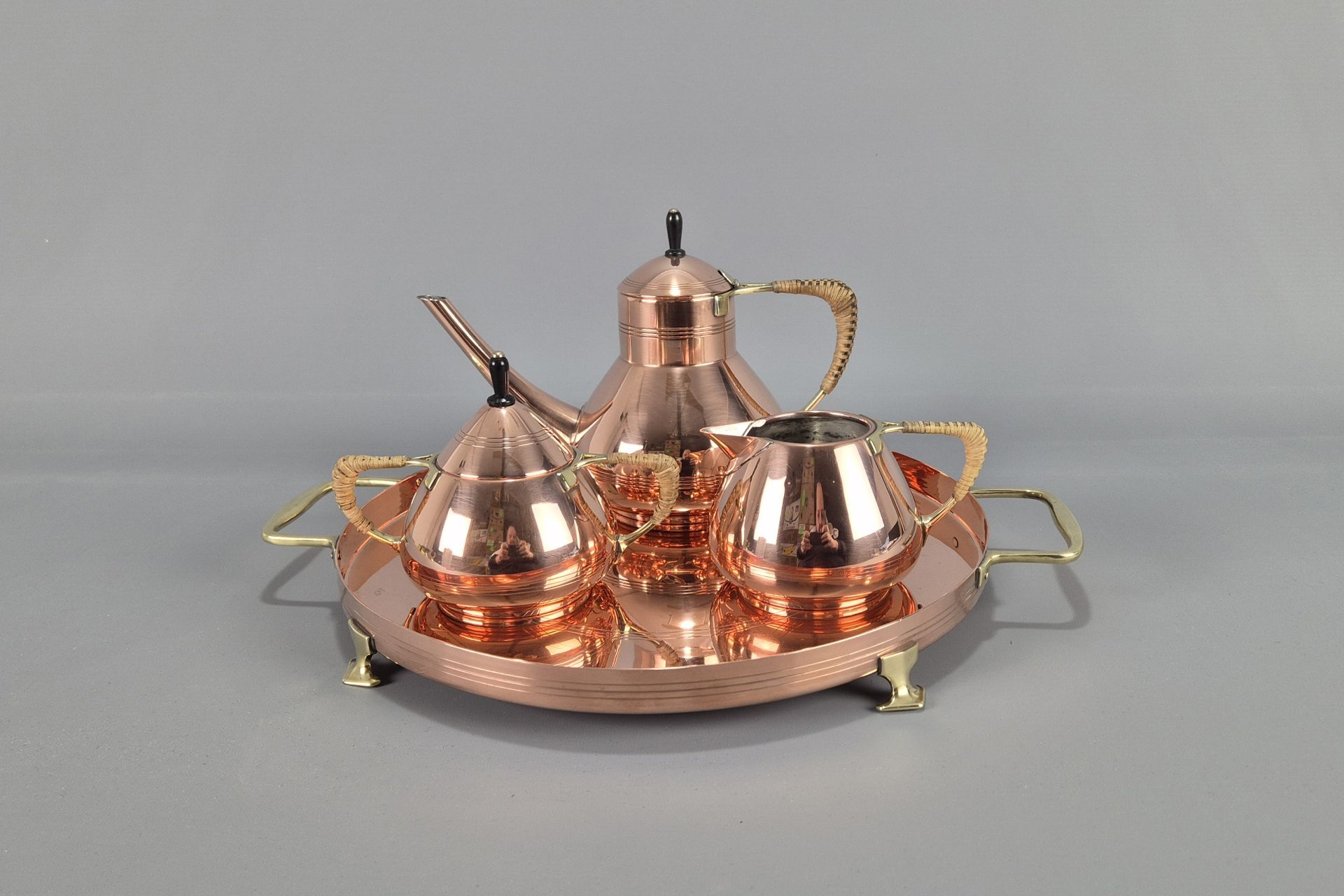
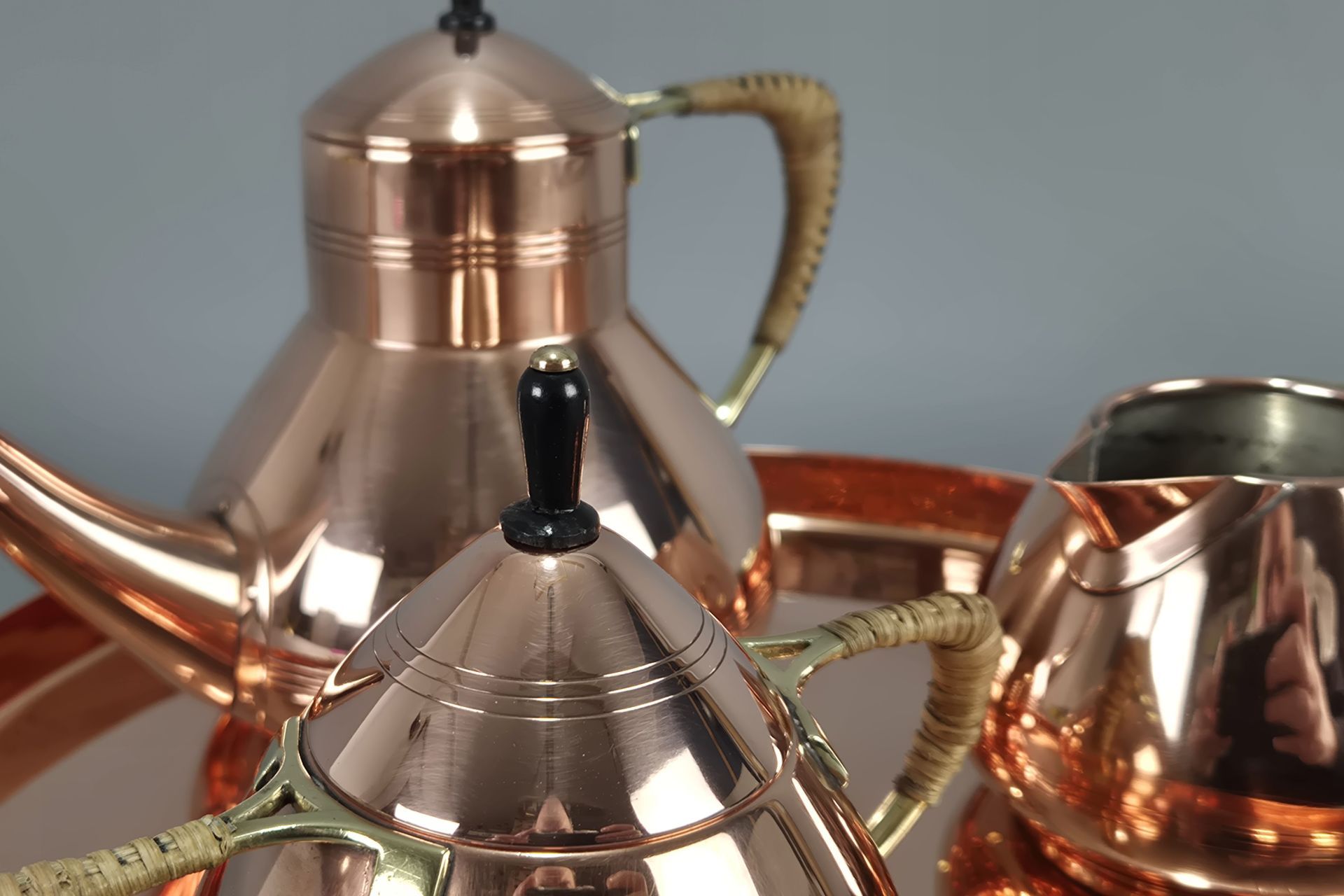
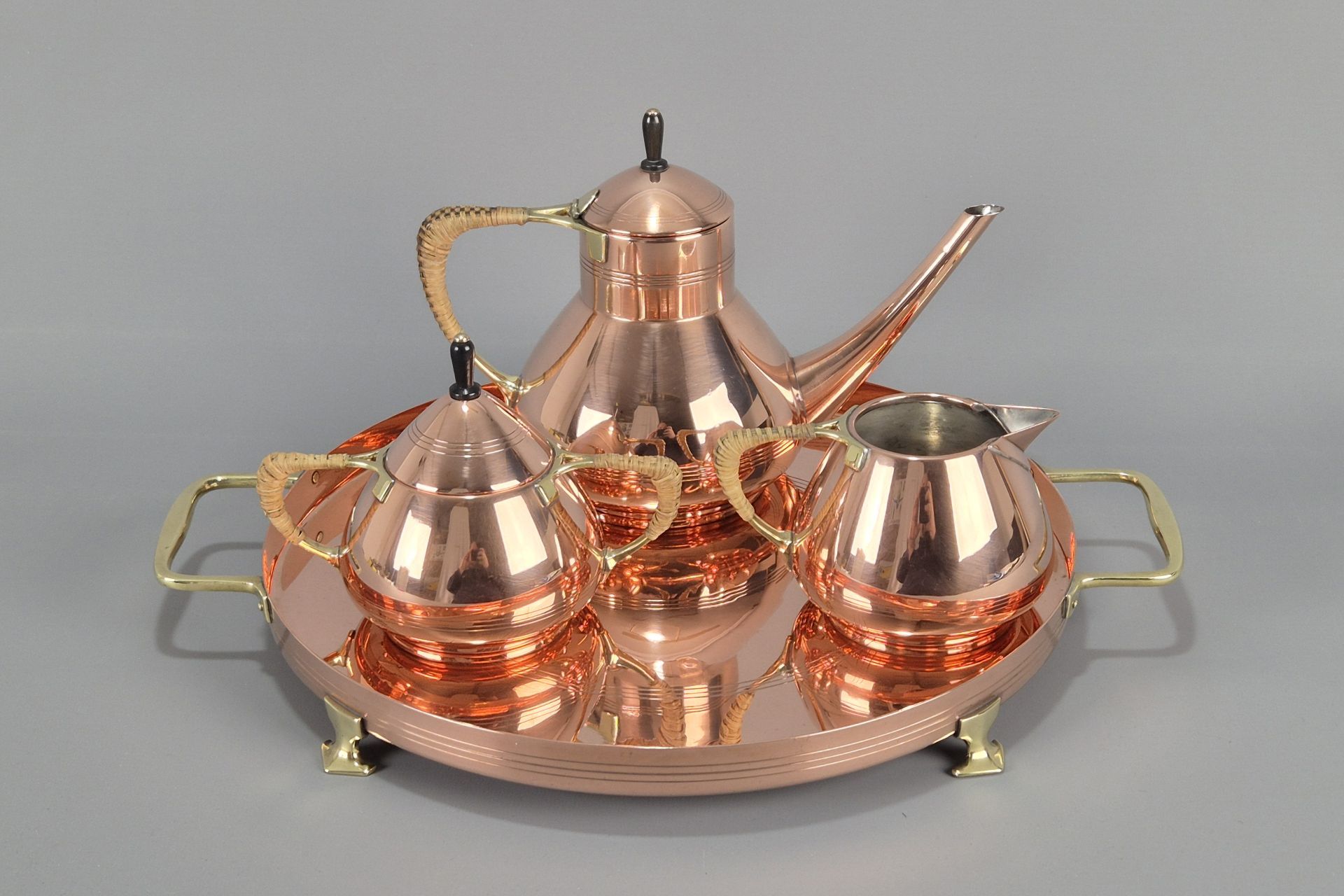
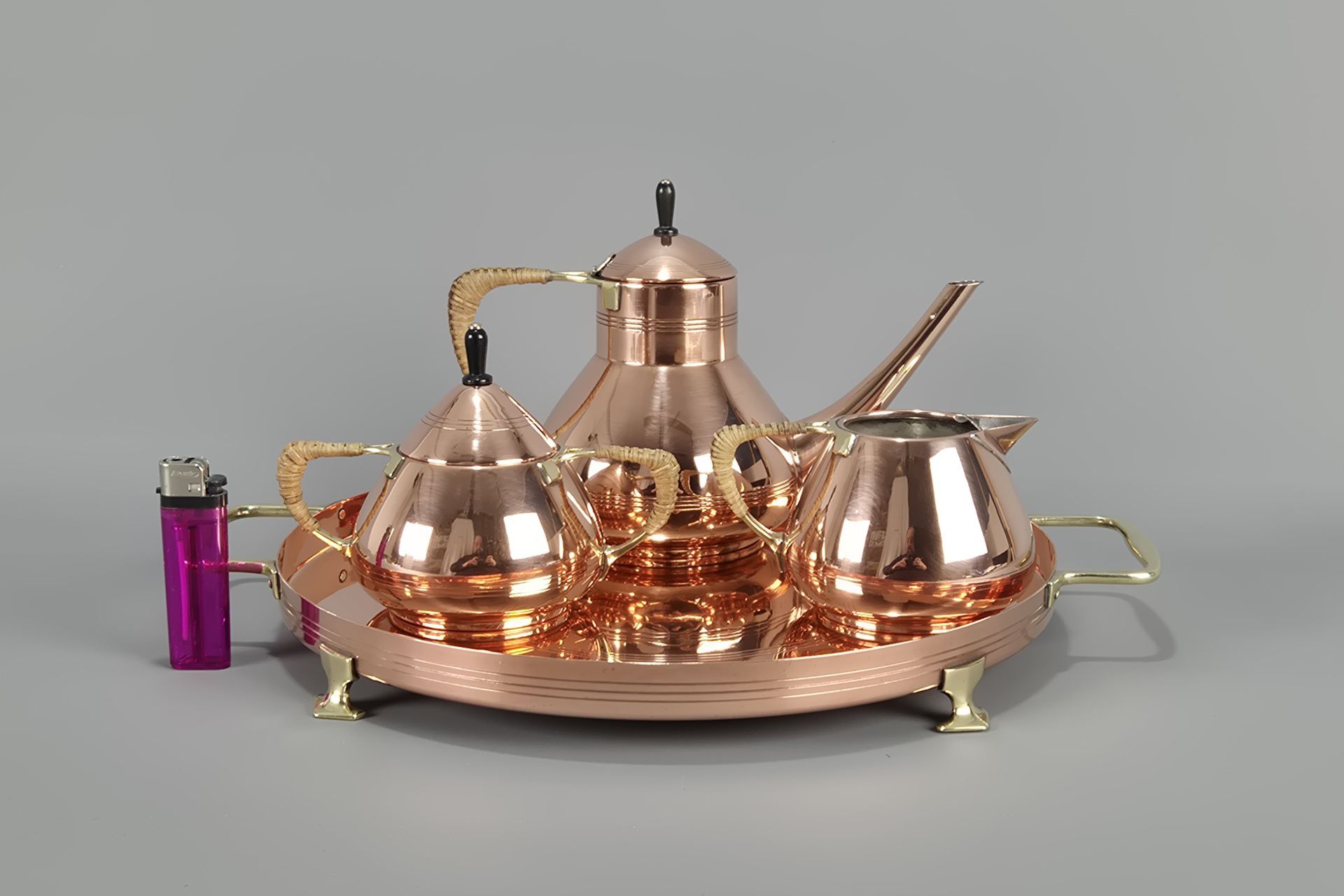
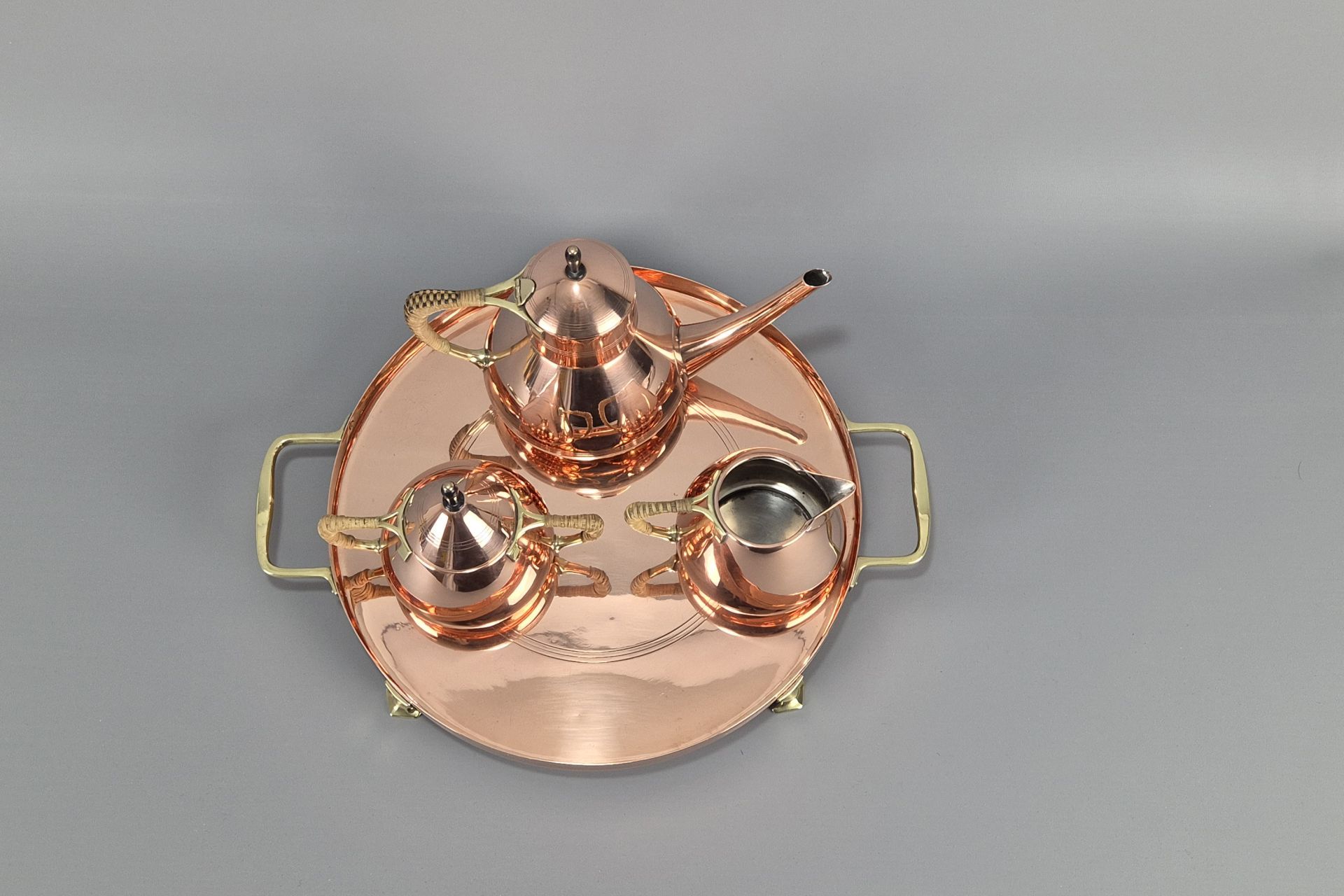
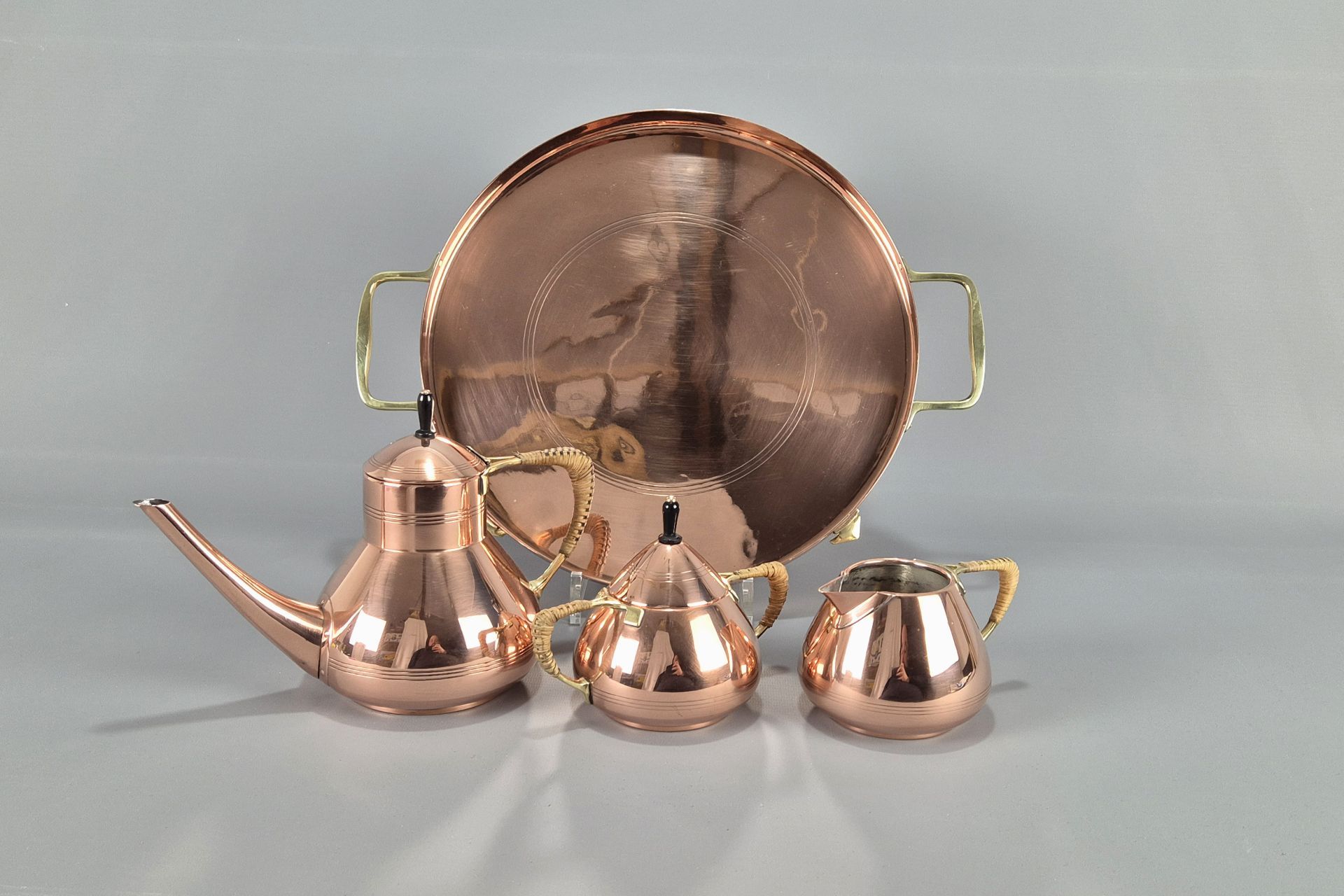
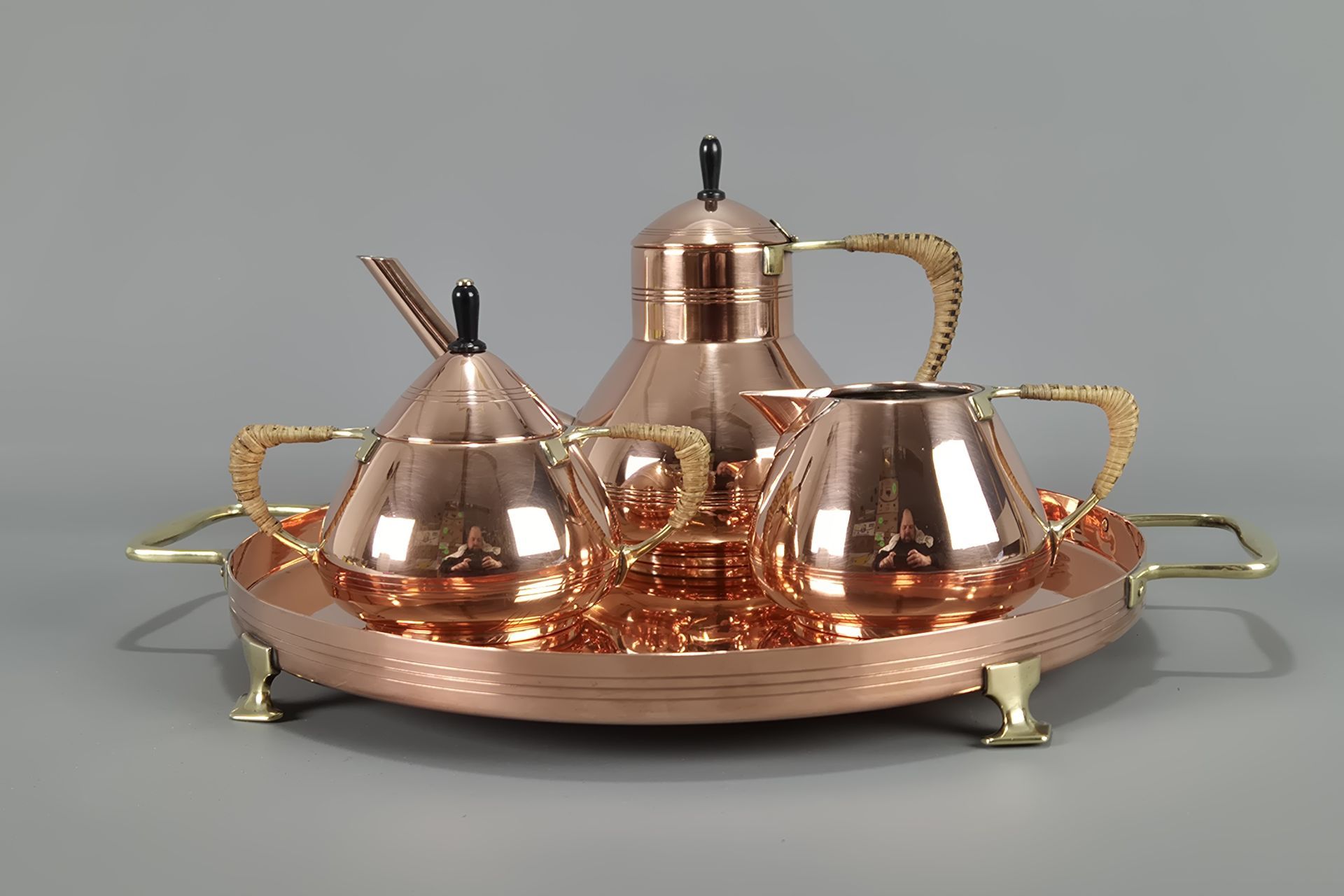
An elegant and rare Art Nouveau tea service by the Württembergische Metallwarenfabrik (WMF), dating to circa 1910.
It features a wonderfully timeless, unadorned design language, attributed to Jan Eisenloeffel for WMF.
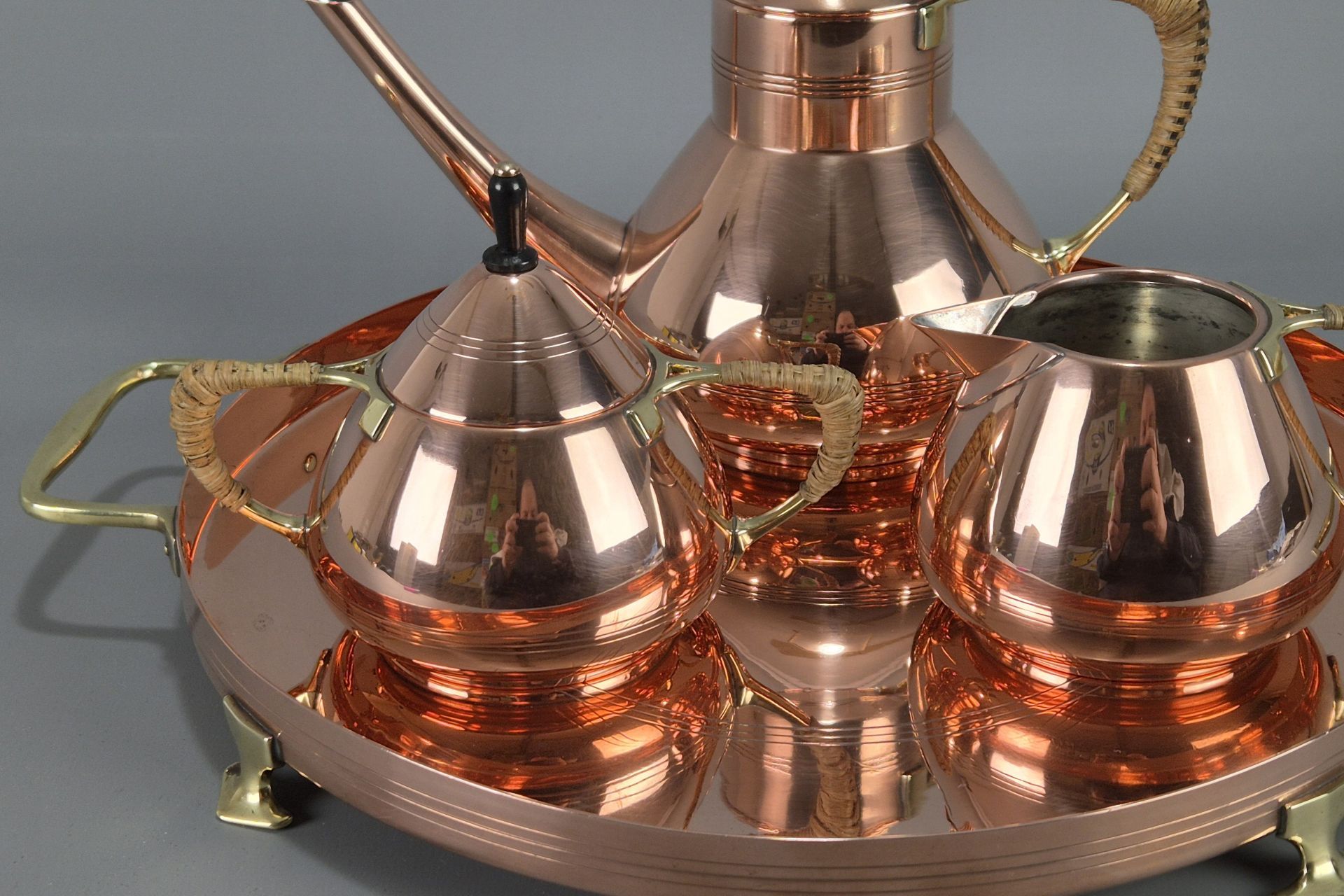
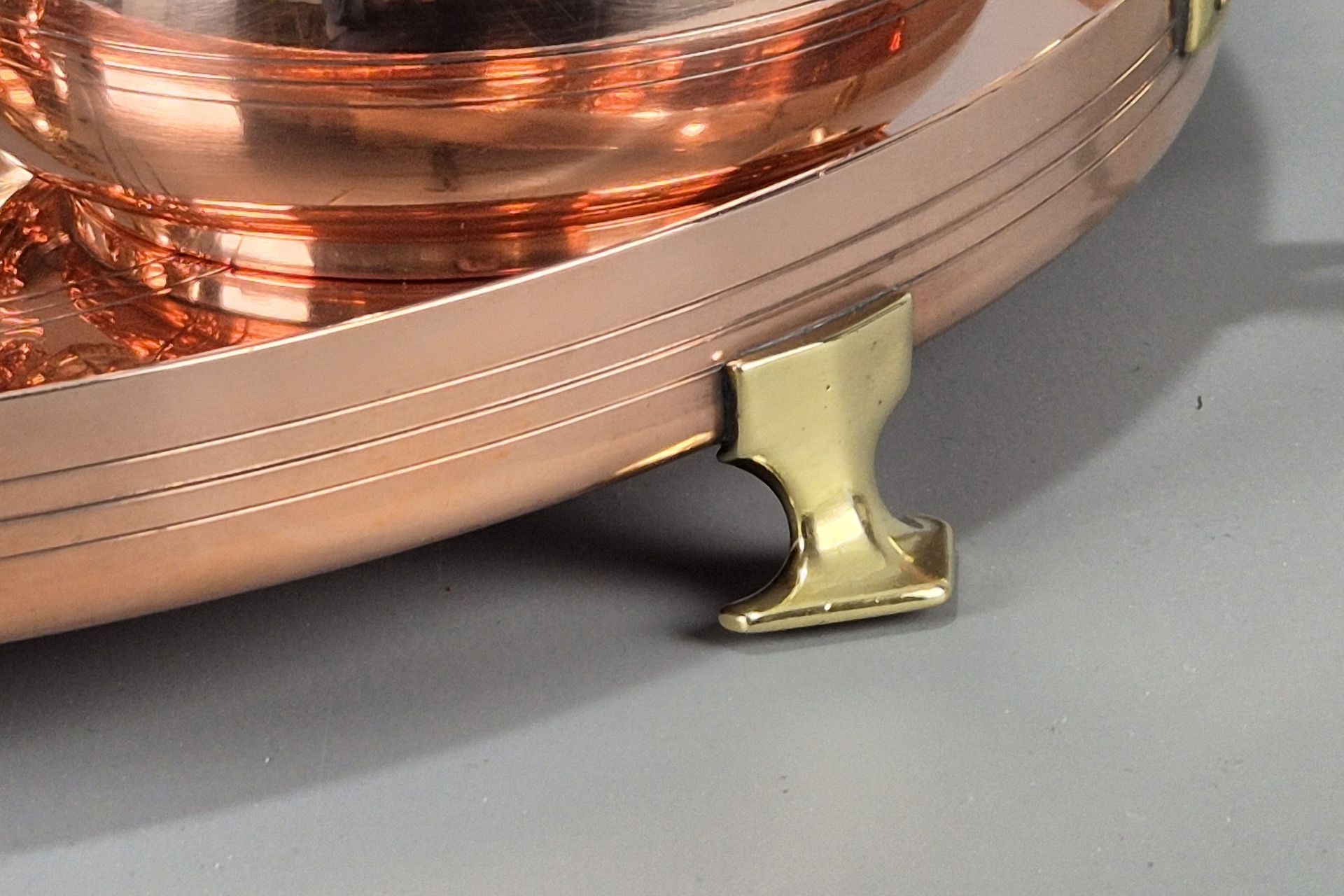
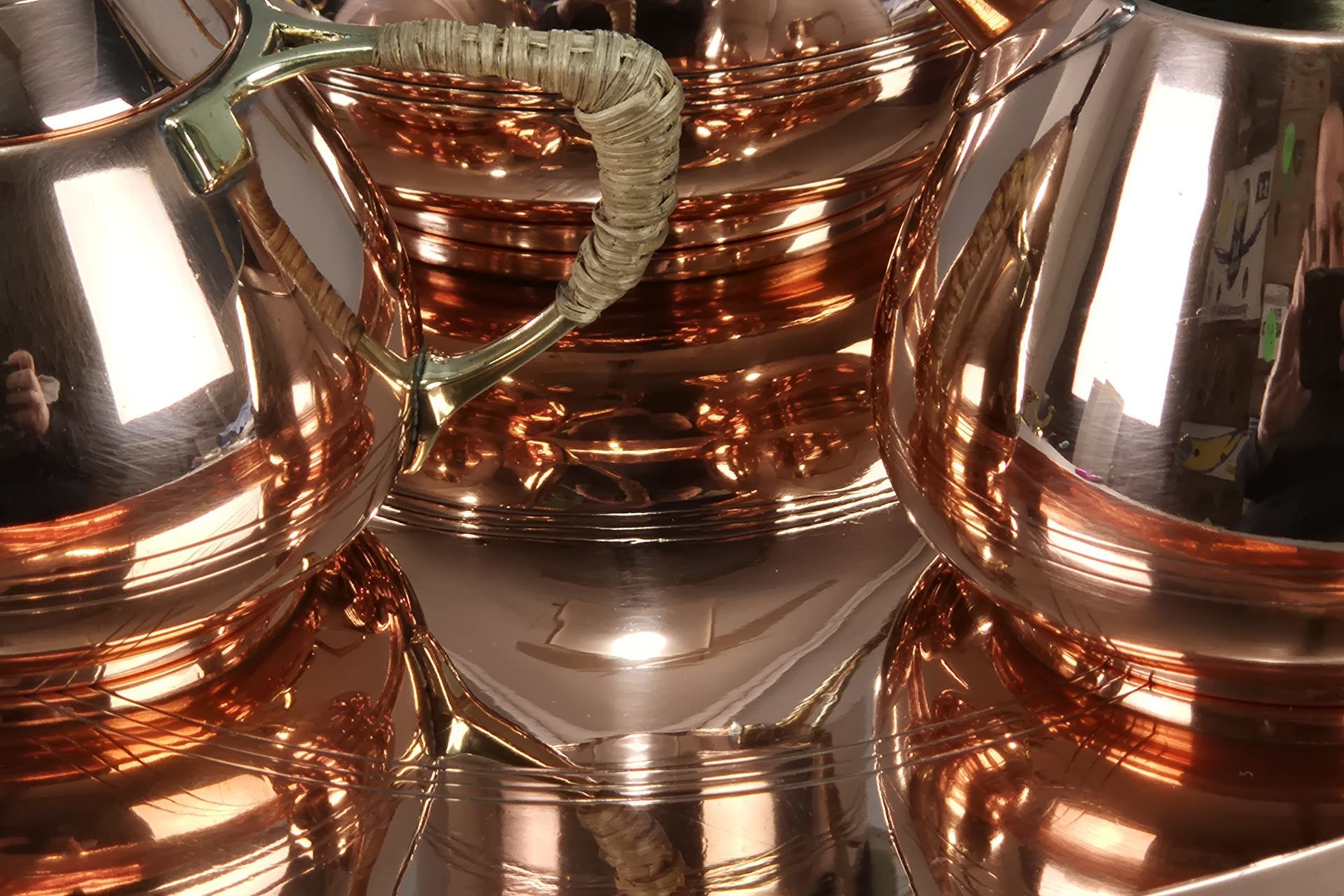
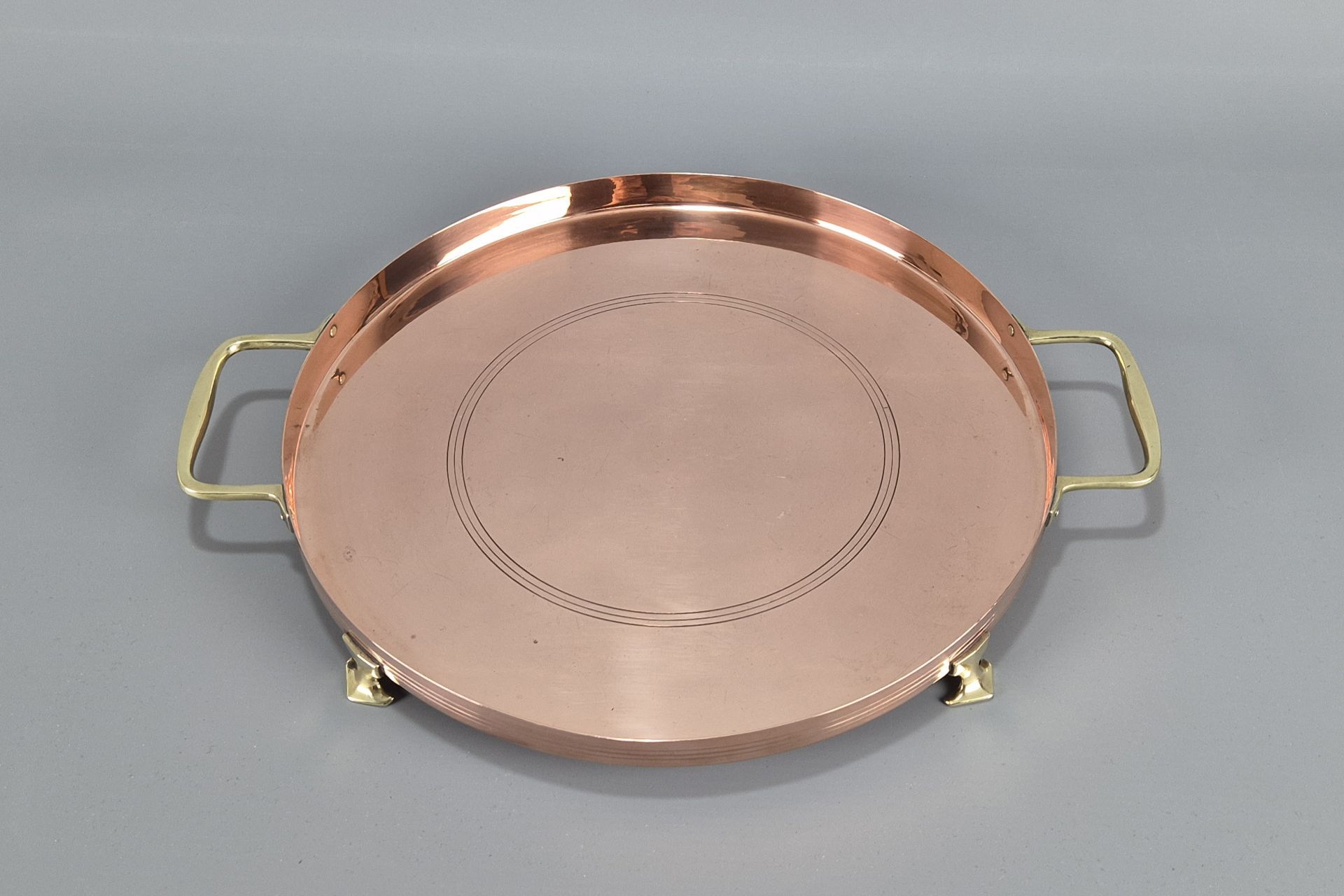
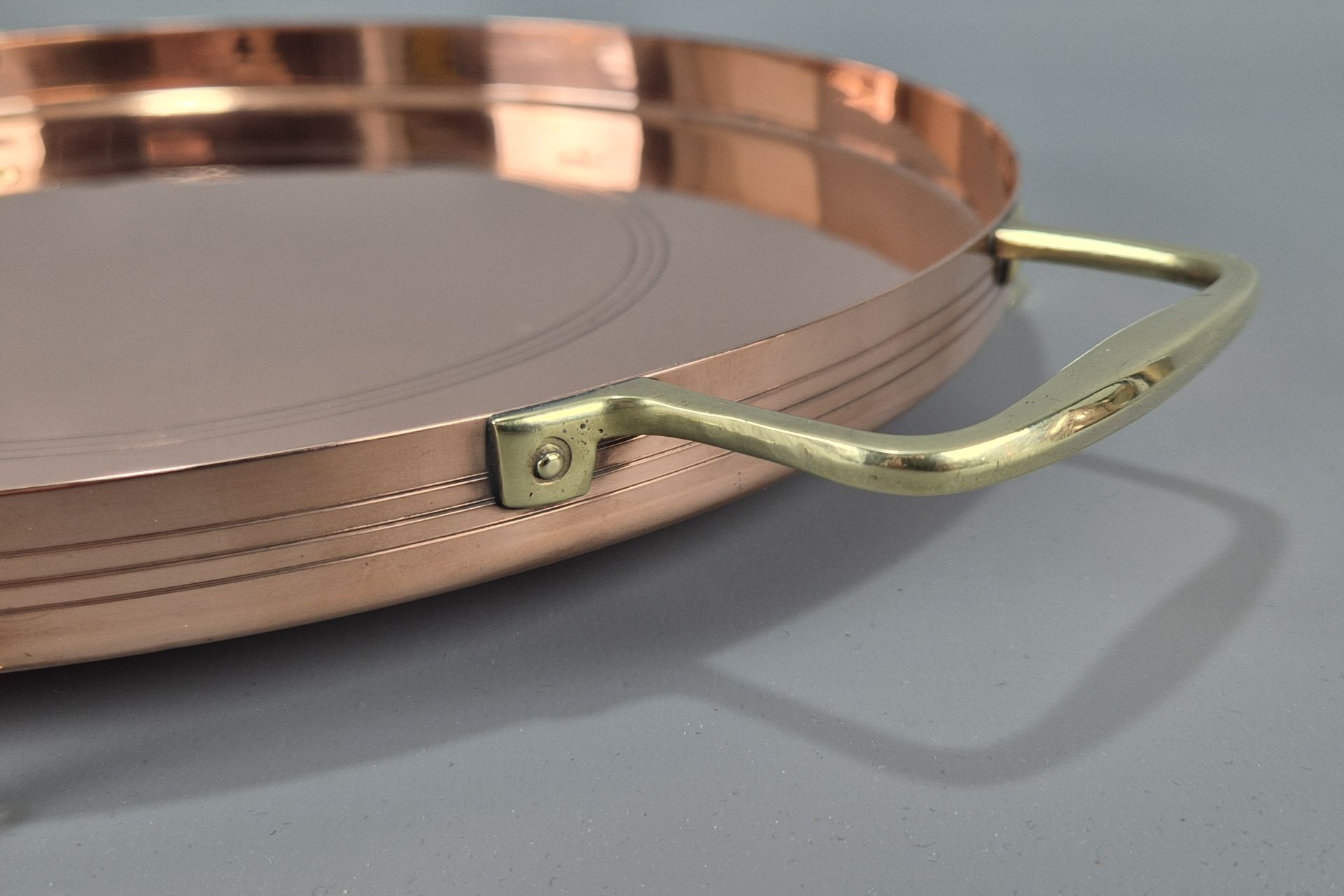
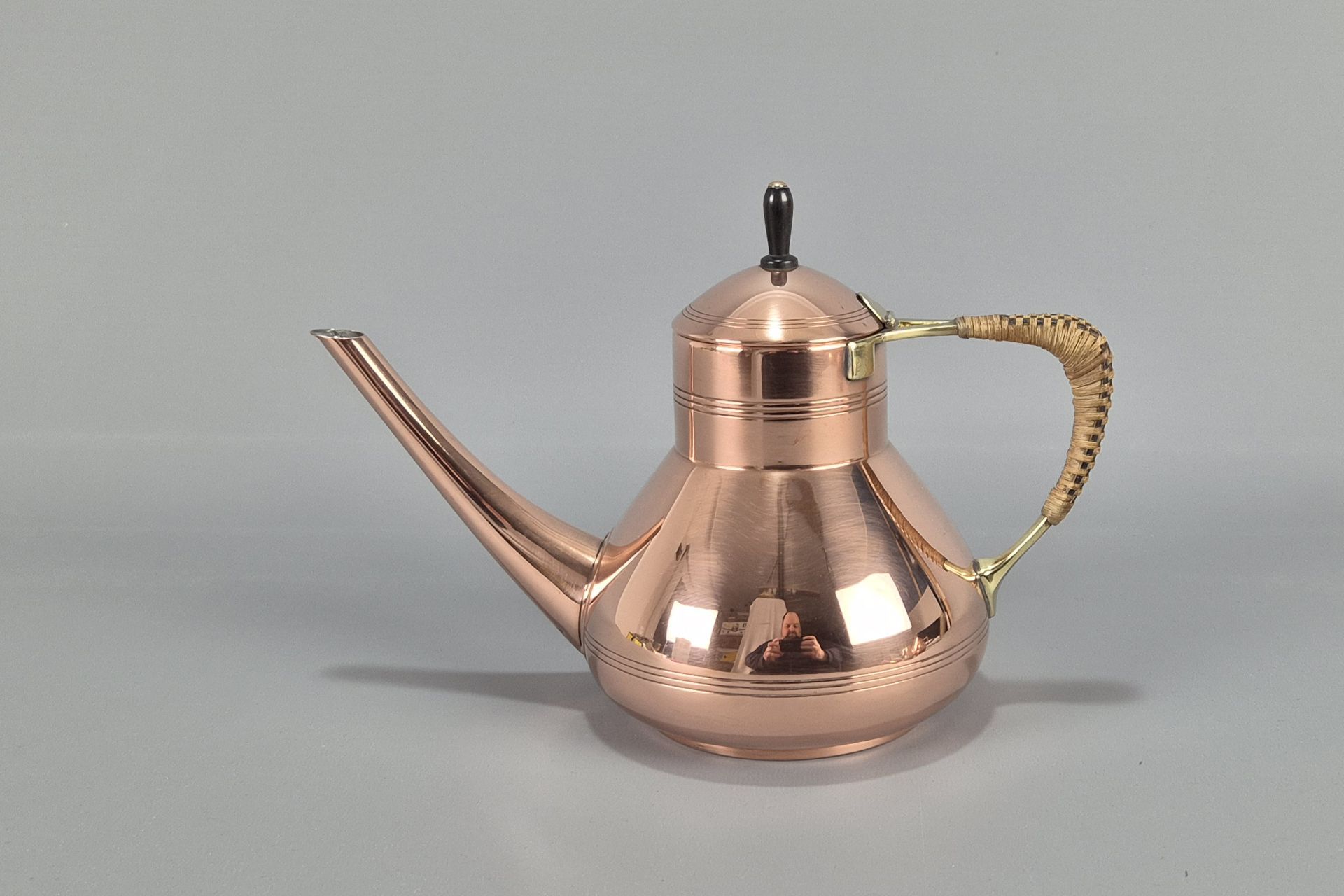
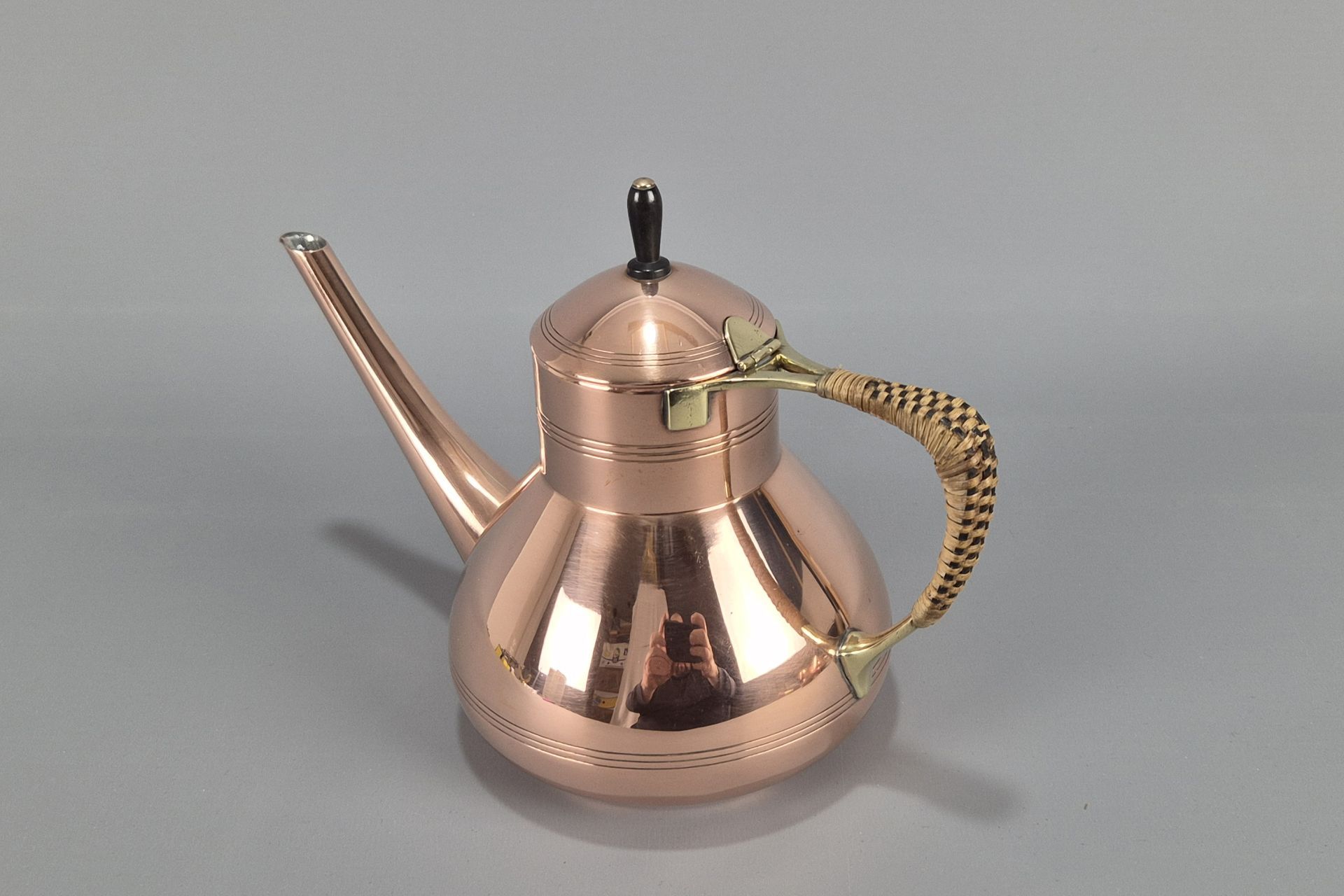
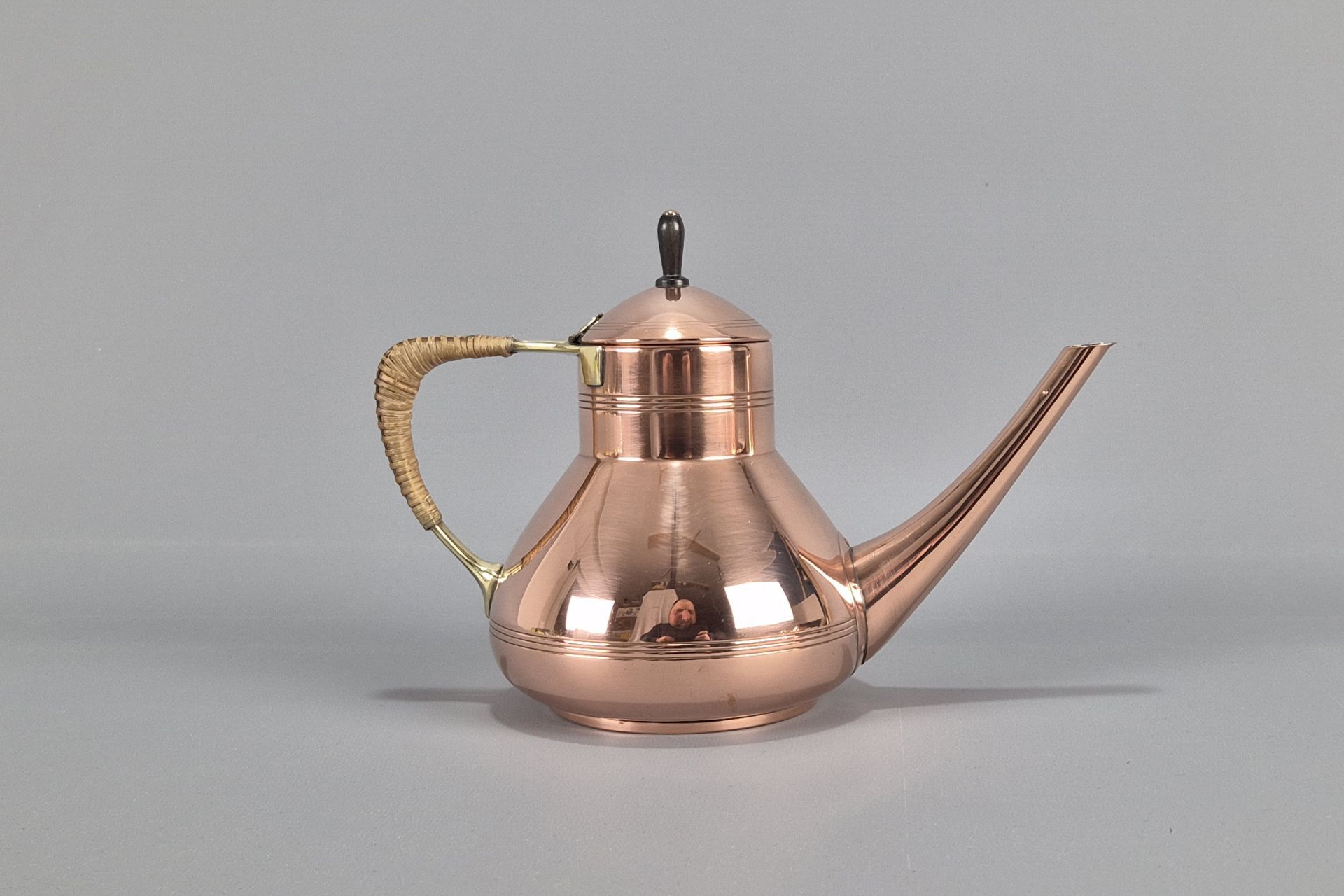
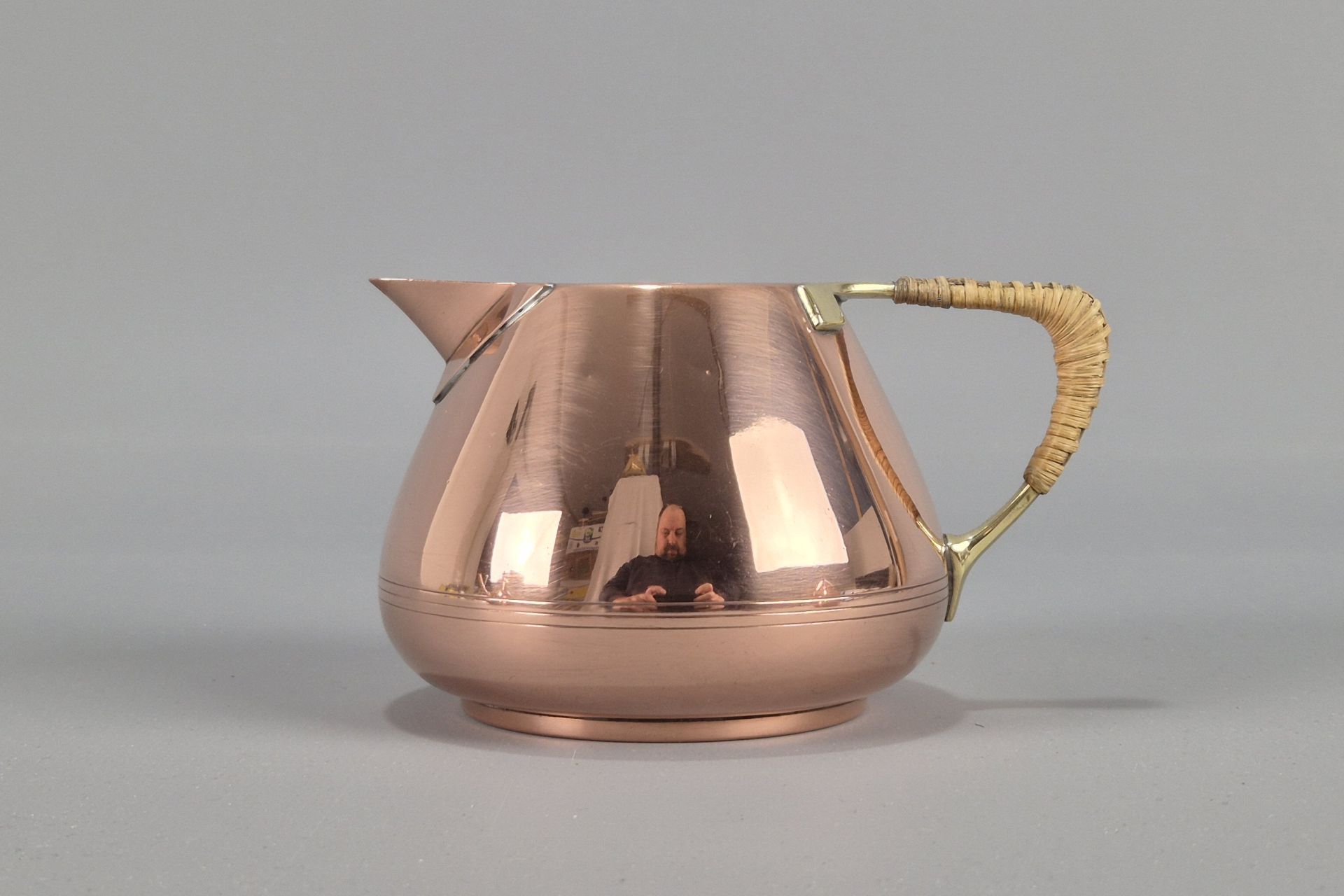
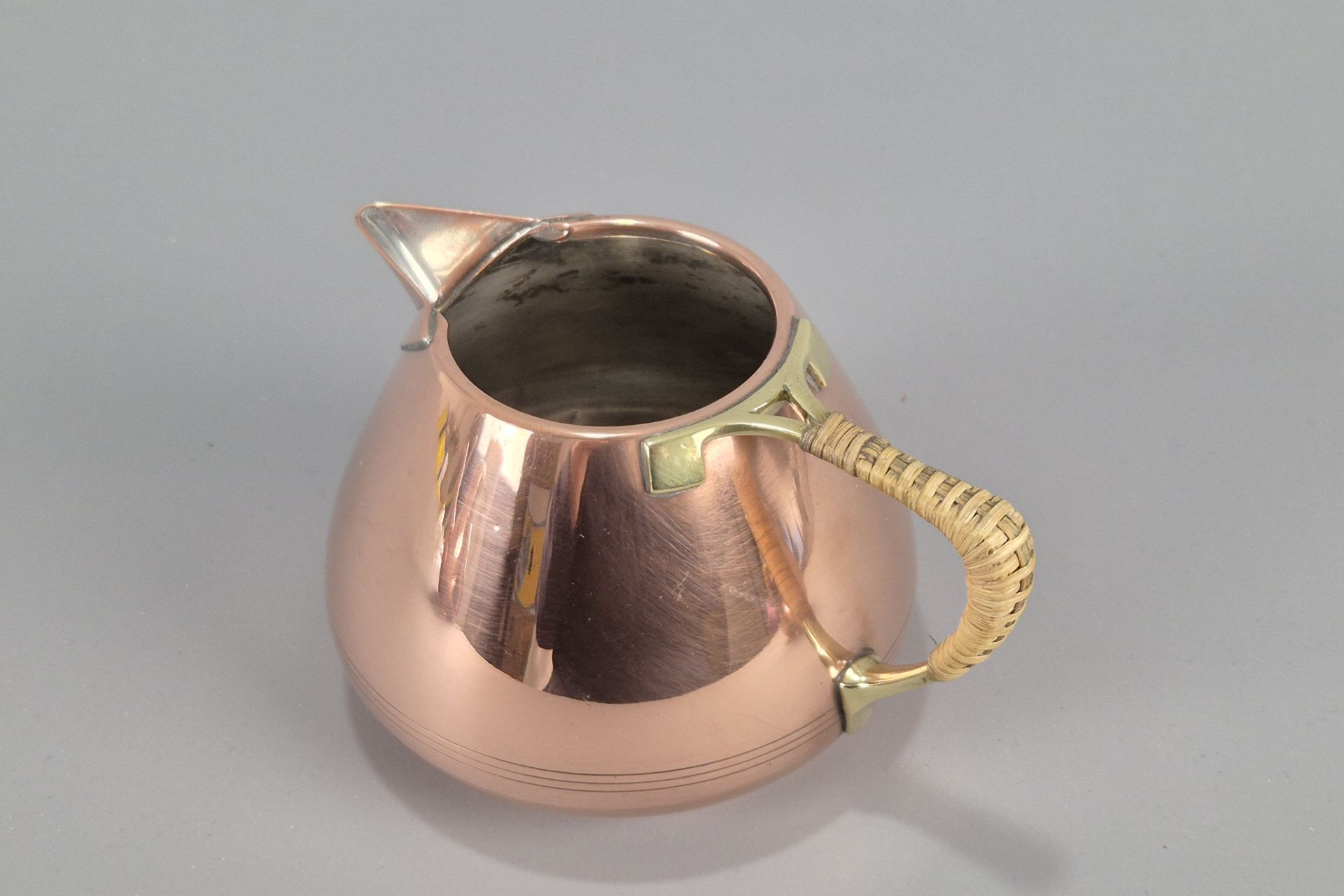
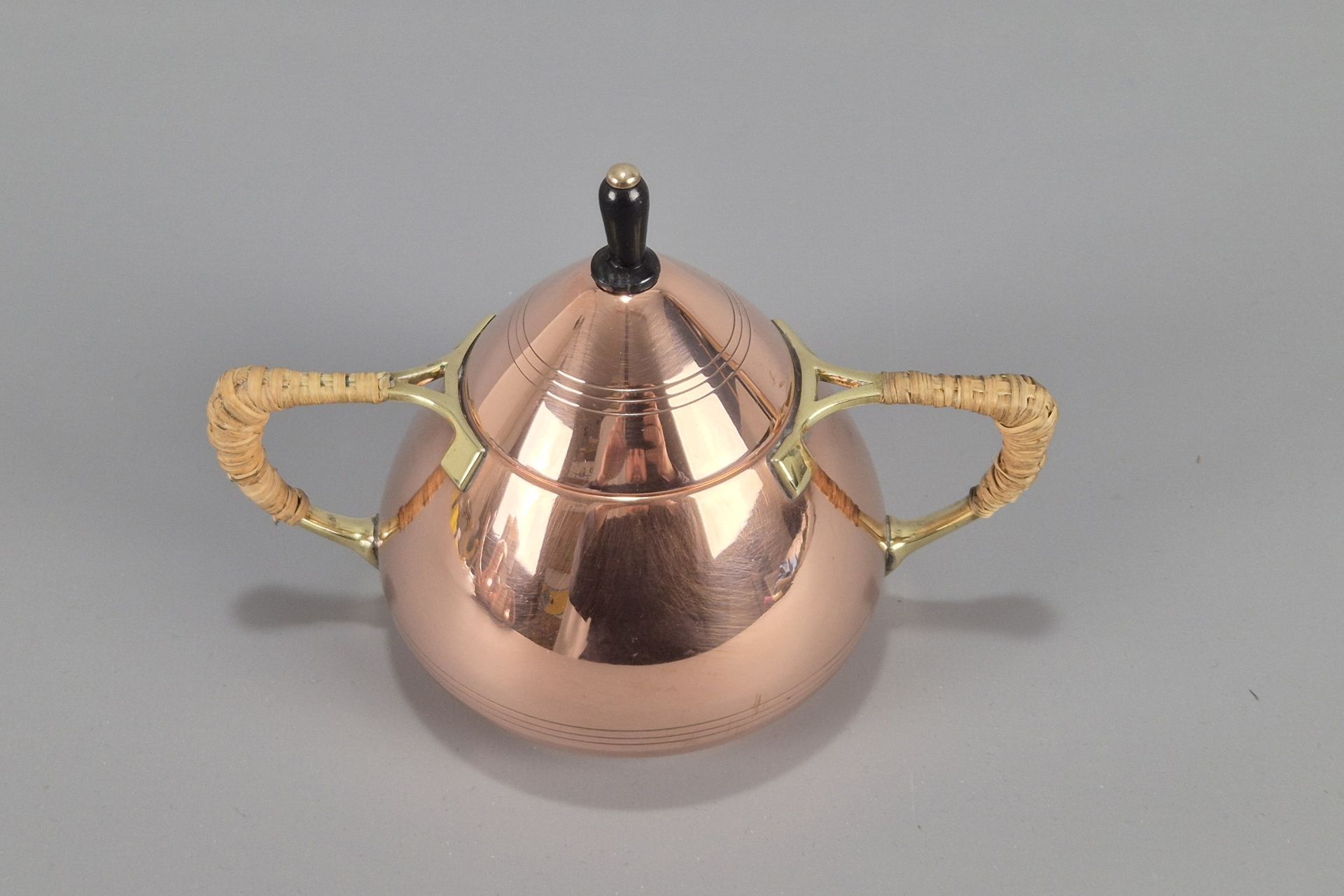
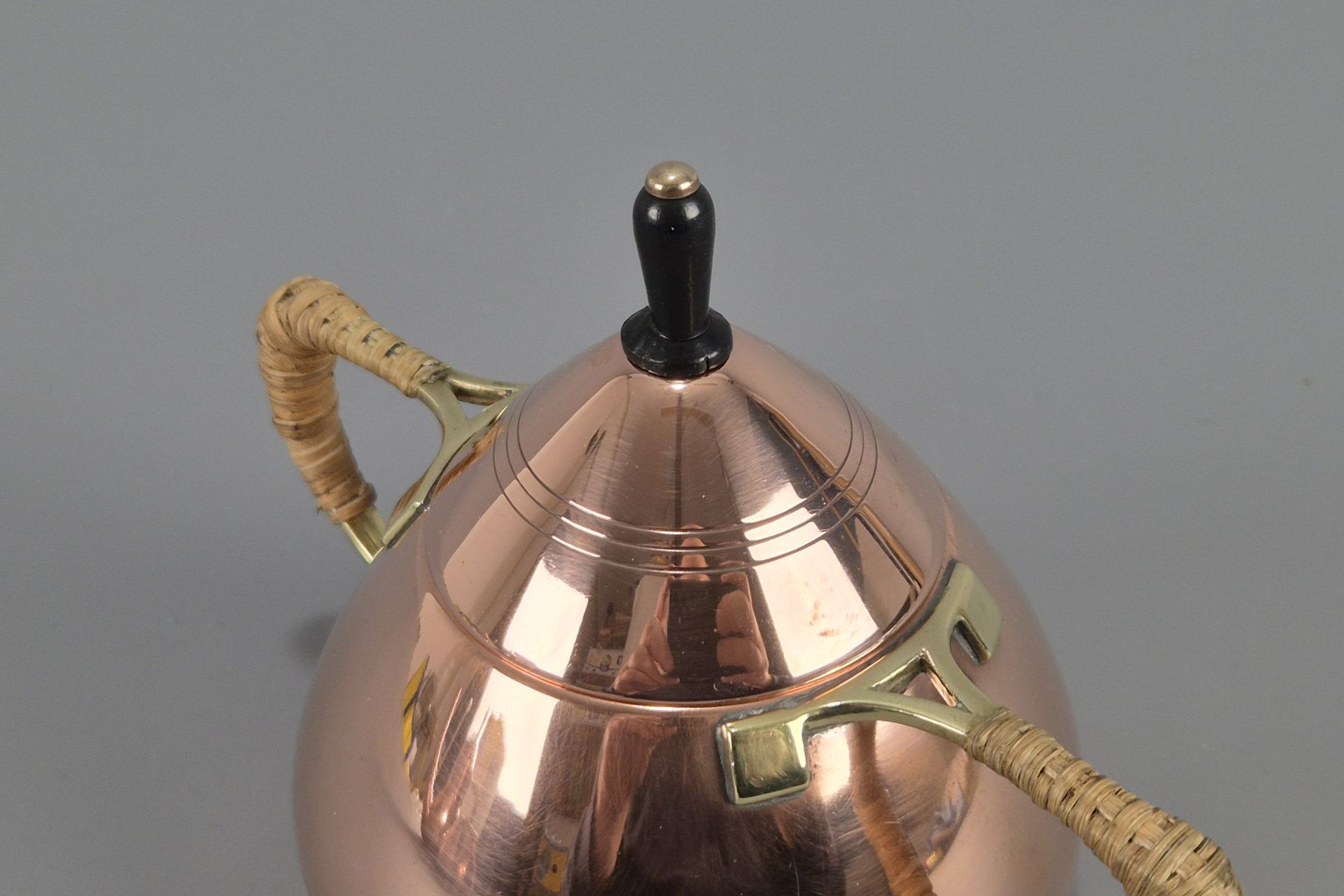
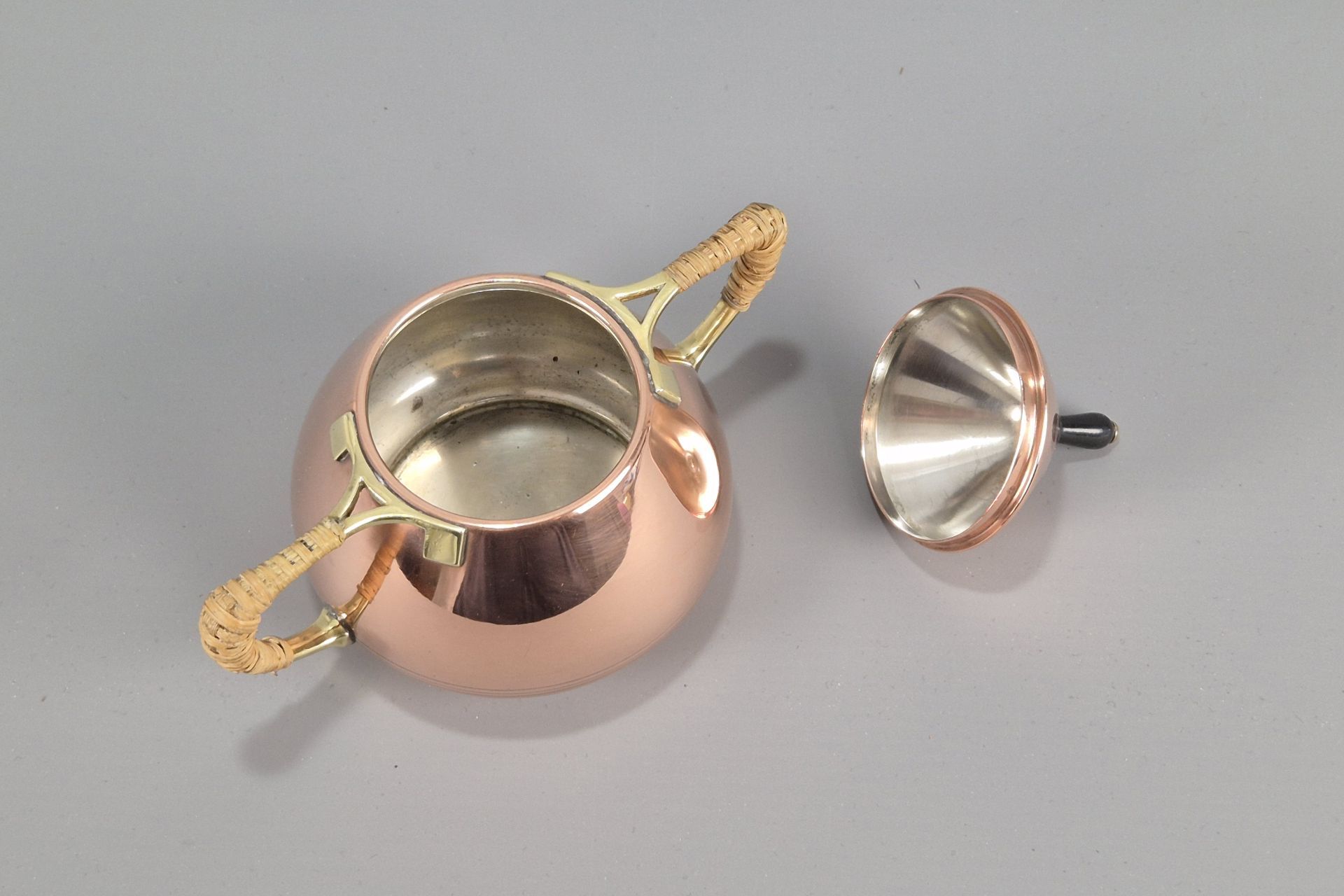
The set—comprising a teapot, a sugar bowl, a milk jug, and a matching tray—is crafted entirely from copper and brass, with brass elements (partially wrapped in wicker/fiber) used for the handles.
A museum-quality set, distinguished by its completeness and its excellent, restored condition.

  • The Tray: ø 31 cm, total width including handles 39 cm, height 3.5 cm. Circular in shape, featuring radial rings along the base and sides.
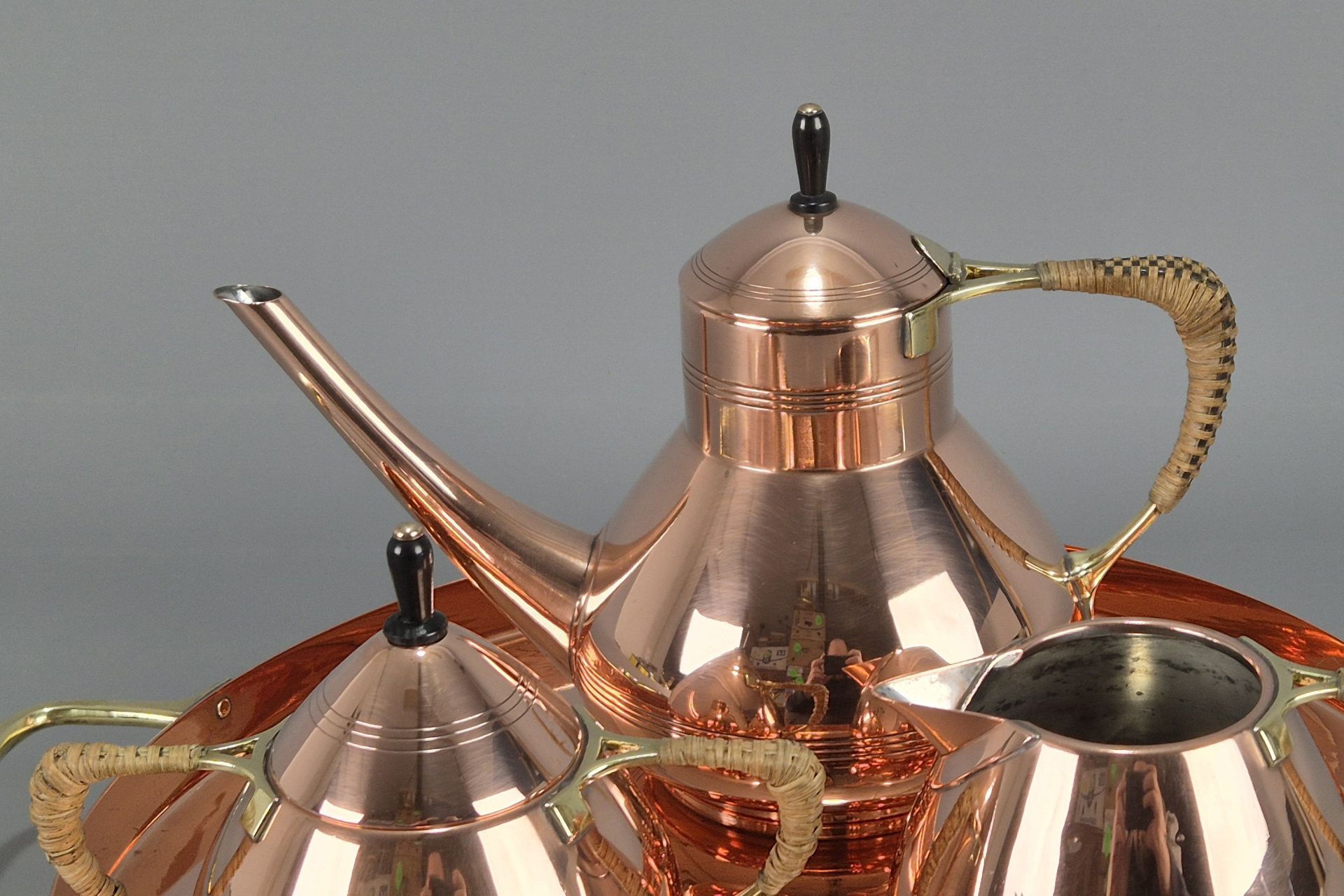
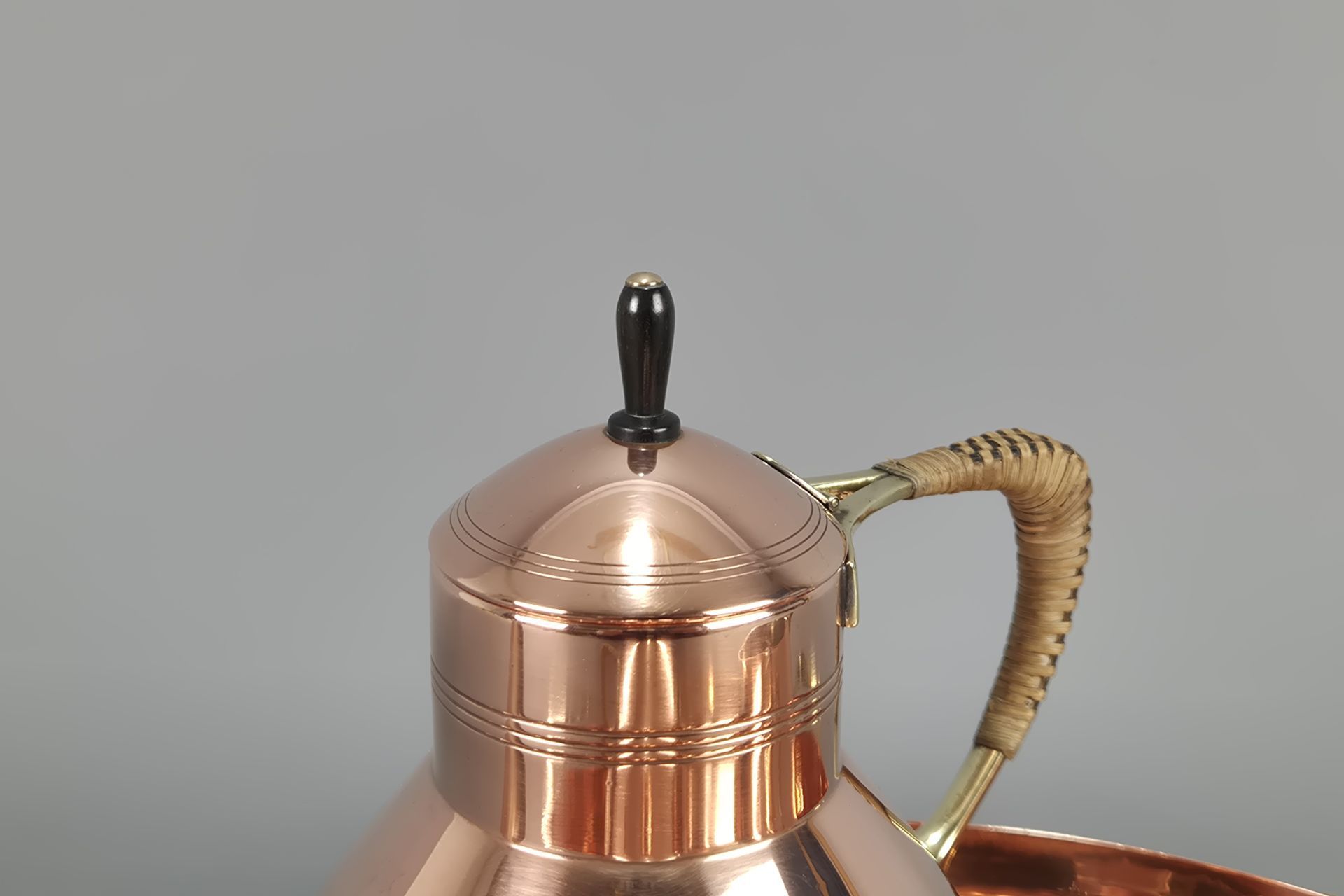
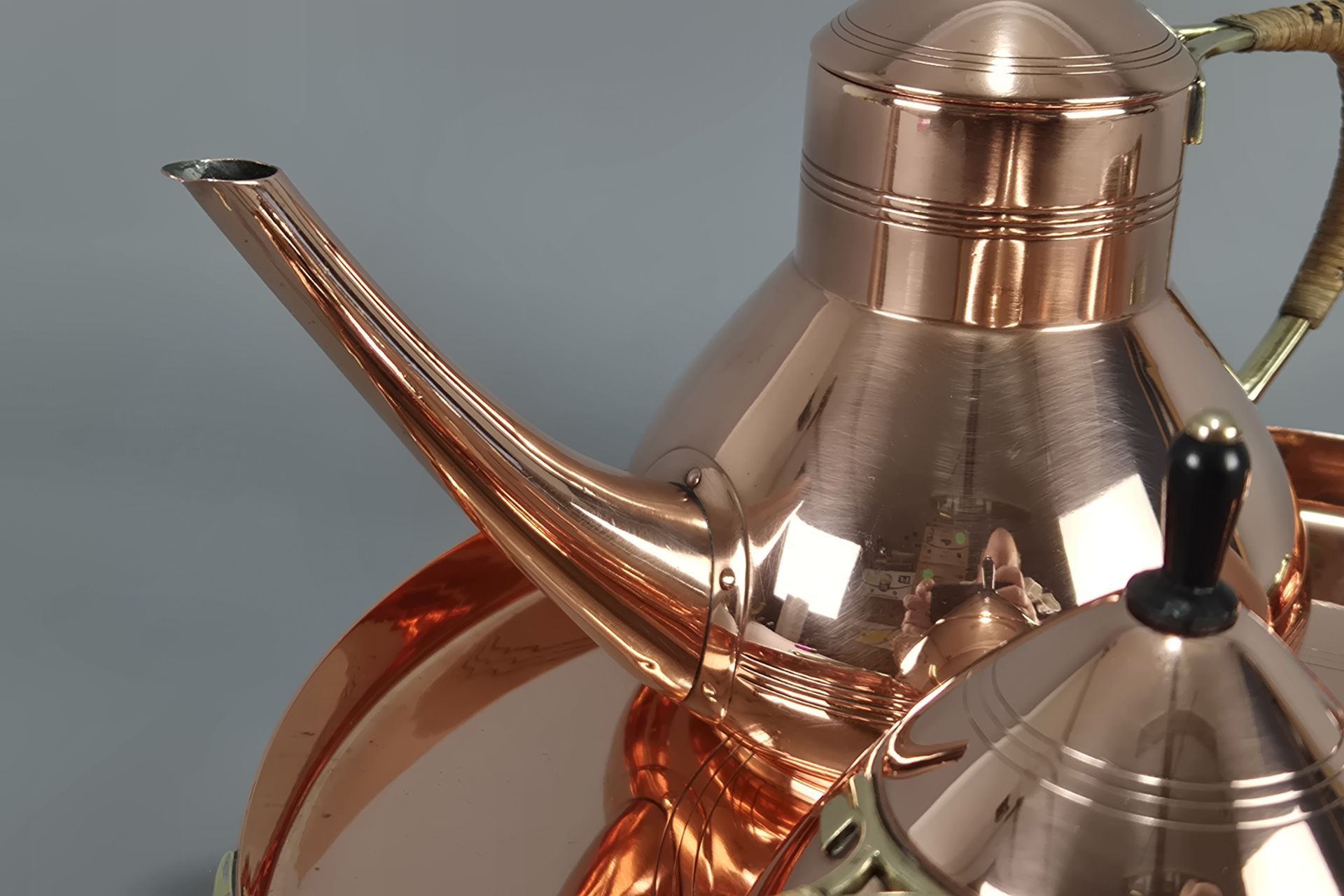
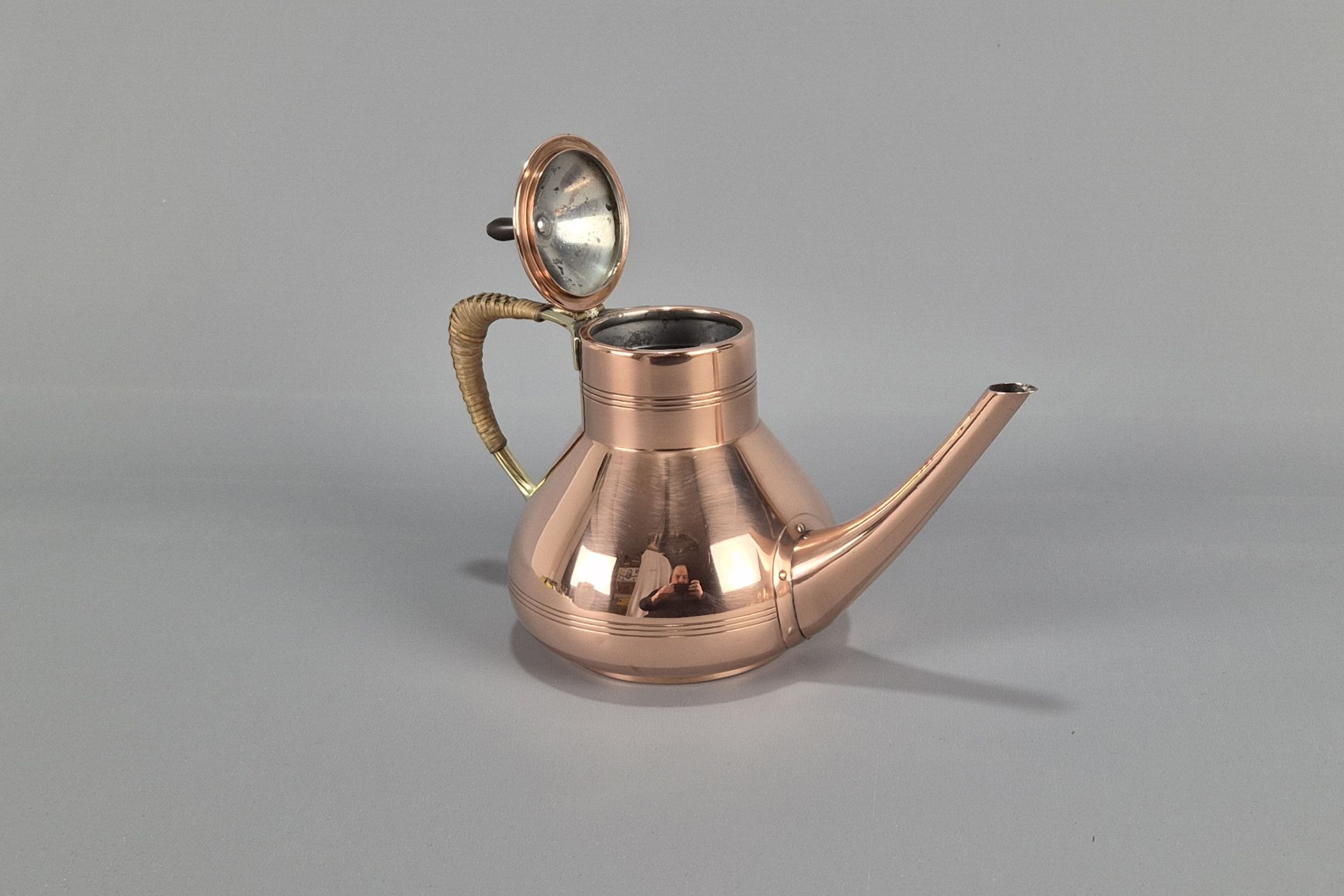
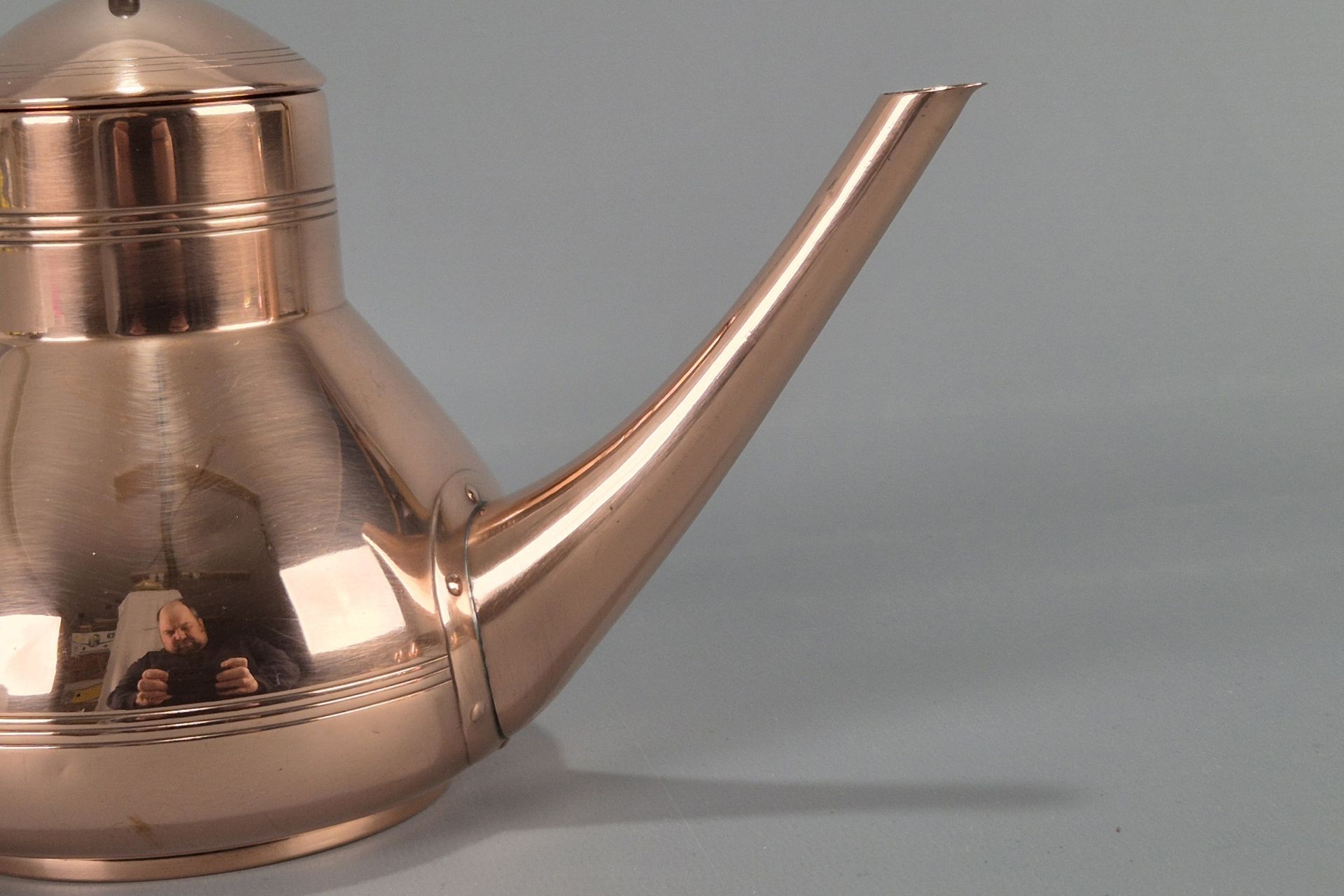
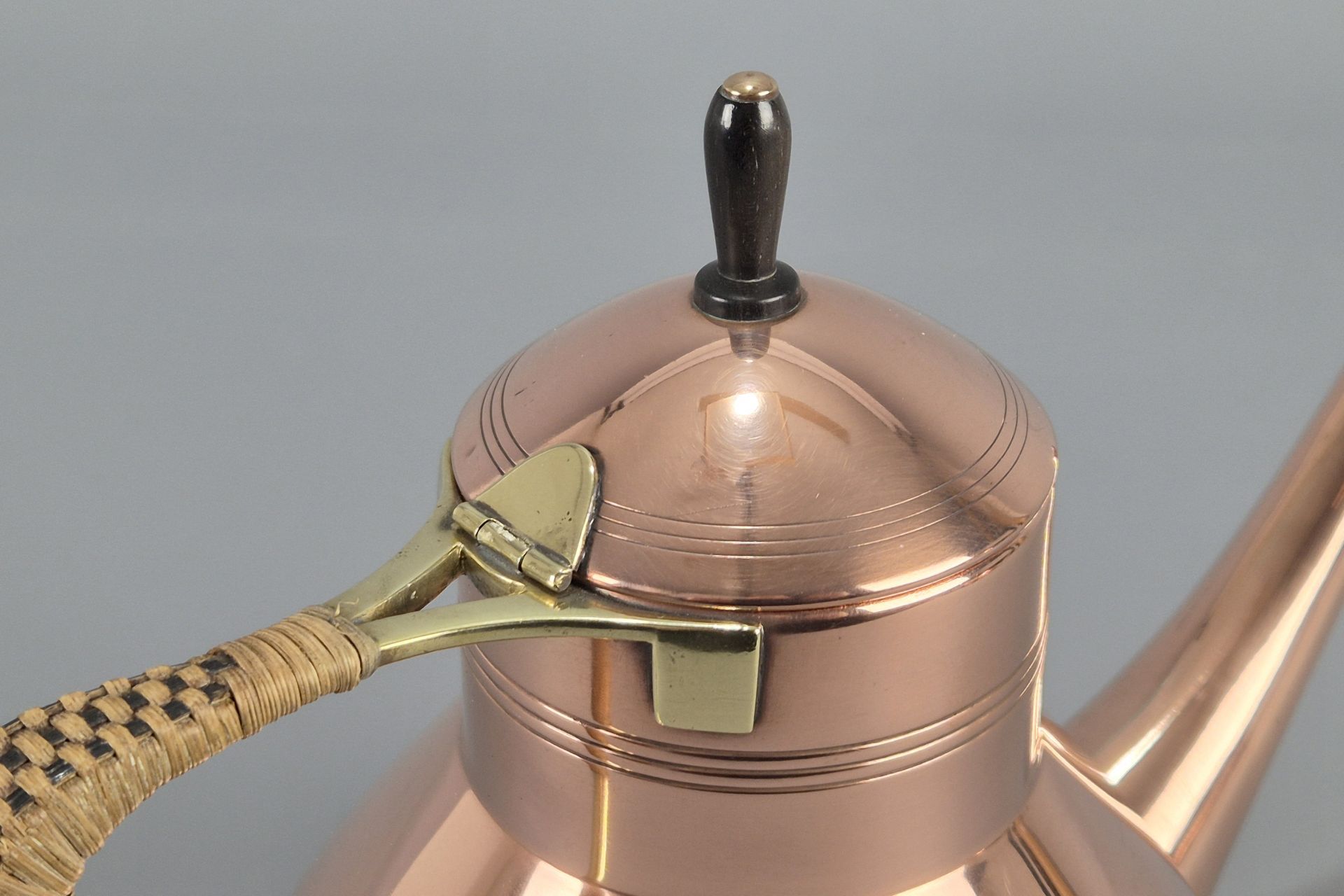
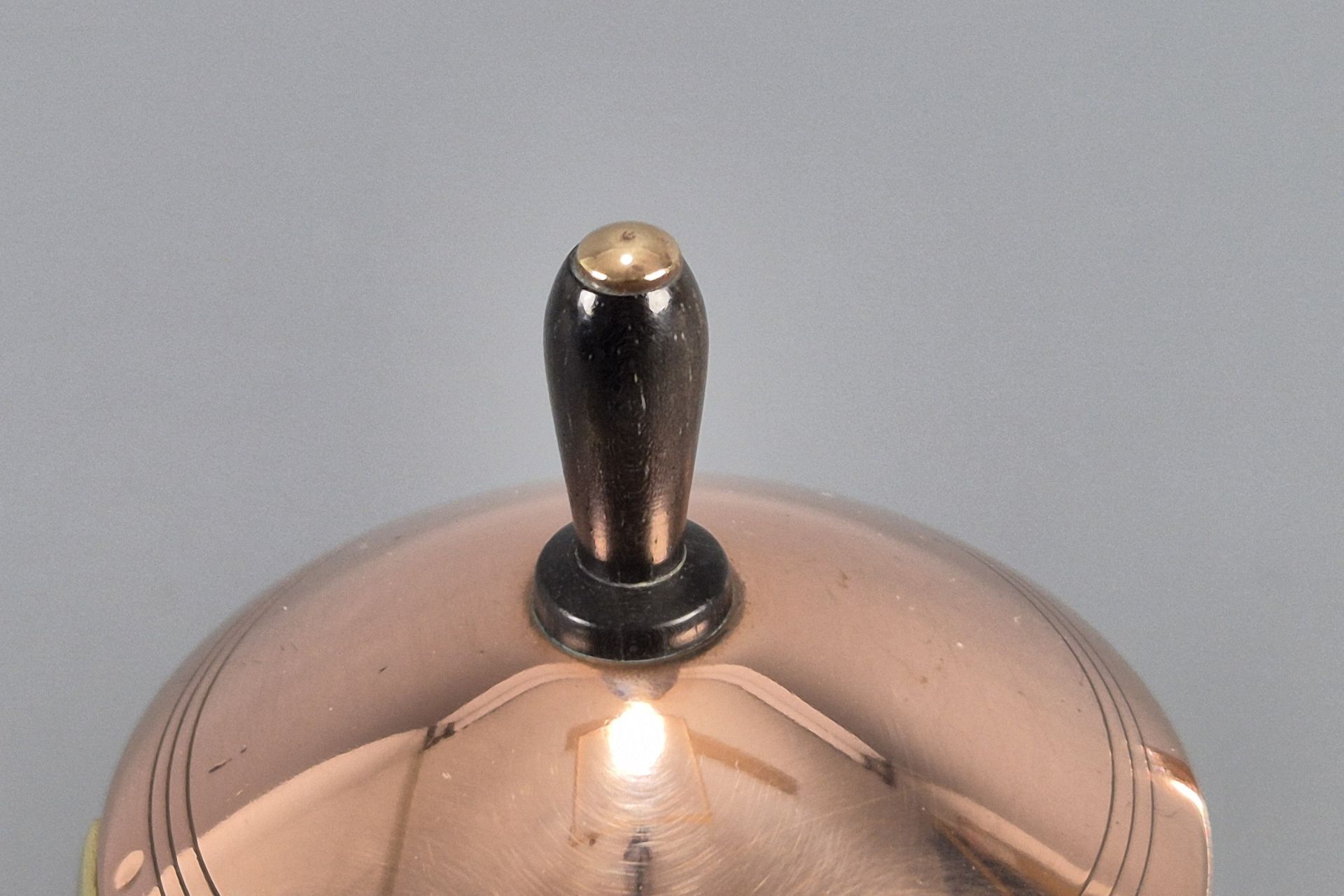
  • The Teapot: Height 16 cm, width 24 cm, ø 12 cm; includes a distinctive riveted spout. The handle is wrapped in multi-colored fiber; the lid features a hinge and a wooden knob.
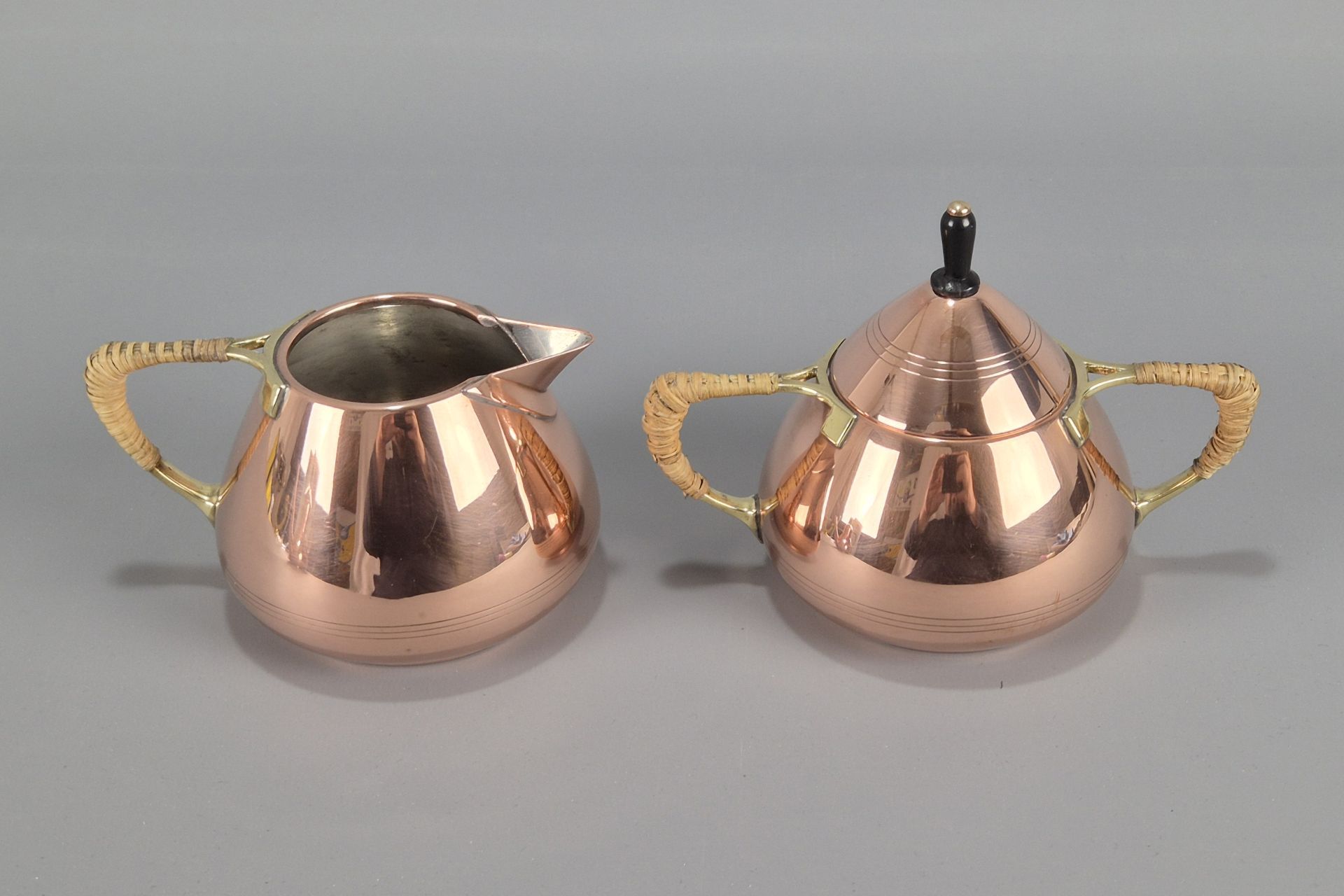
  • The Sugar Bowl: Height 11.5 cm, width 15.5 cm, ø 10 cm. Features wrapped handles, a removable lid, and a wooden knob.
  • The Milk Jug: Height 7.5 cm, width 12.5 cm, depth 10 cm.

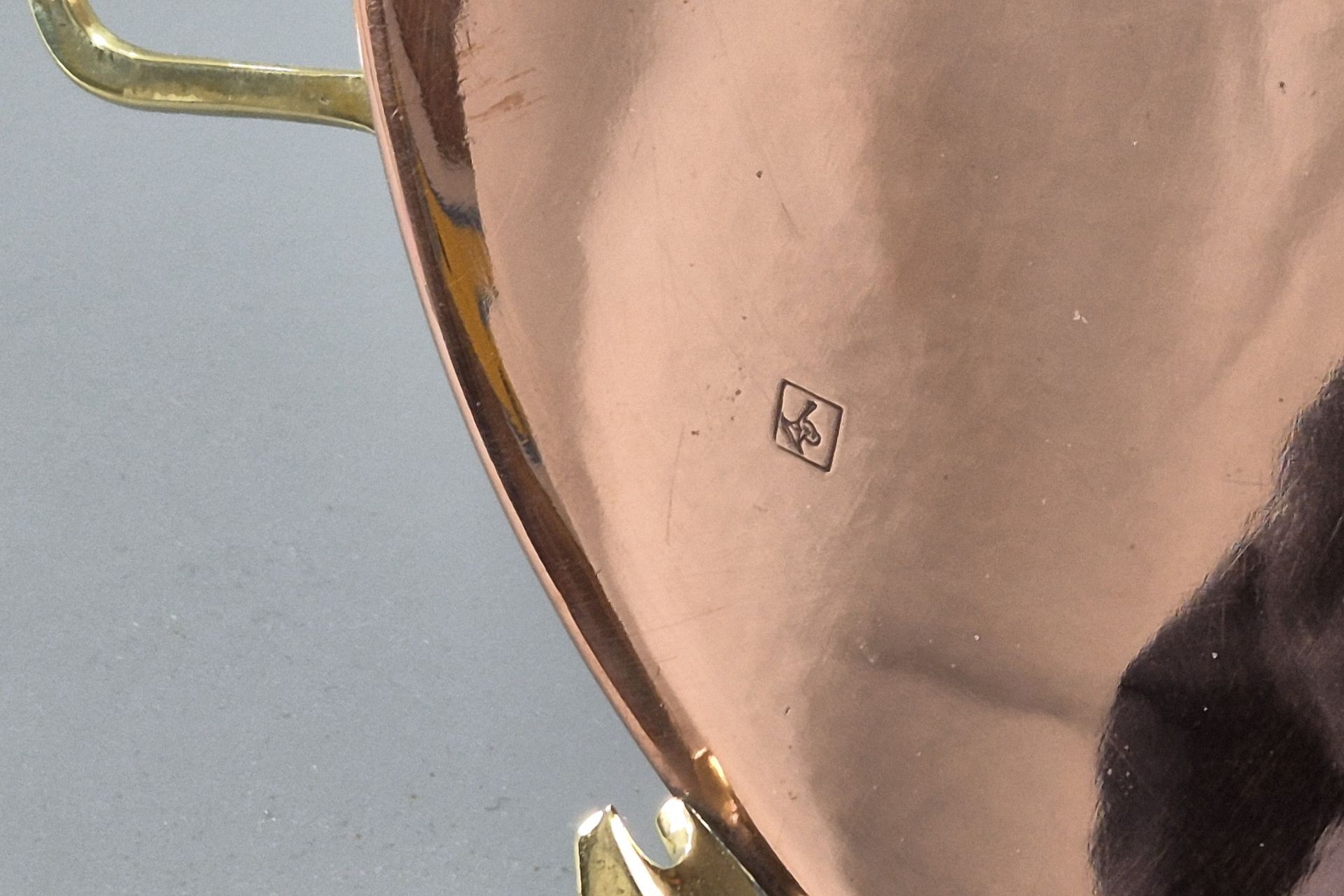
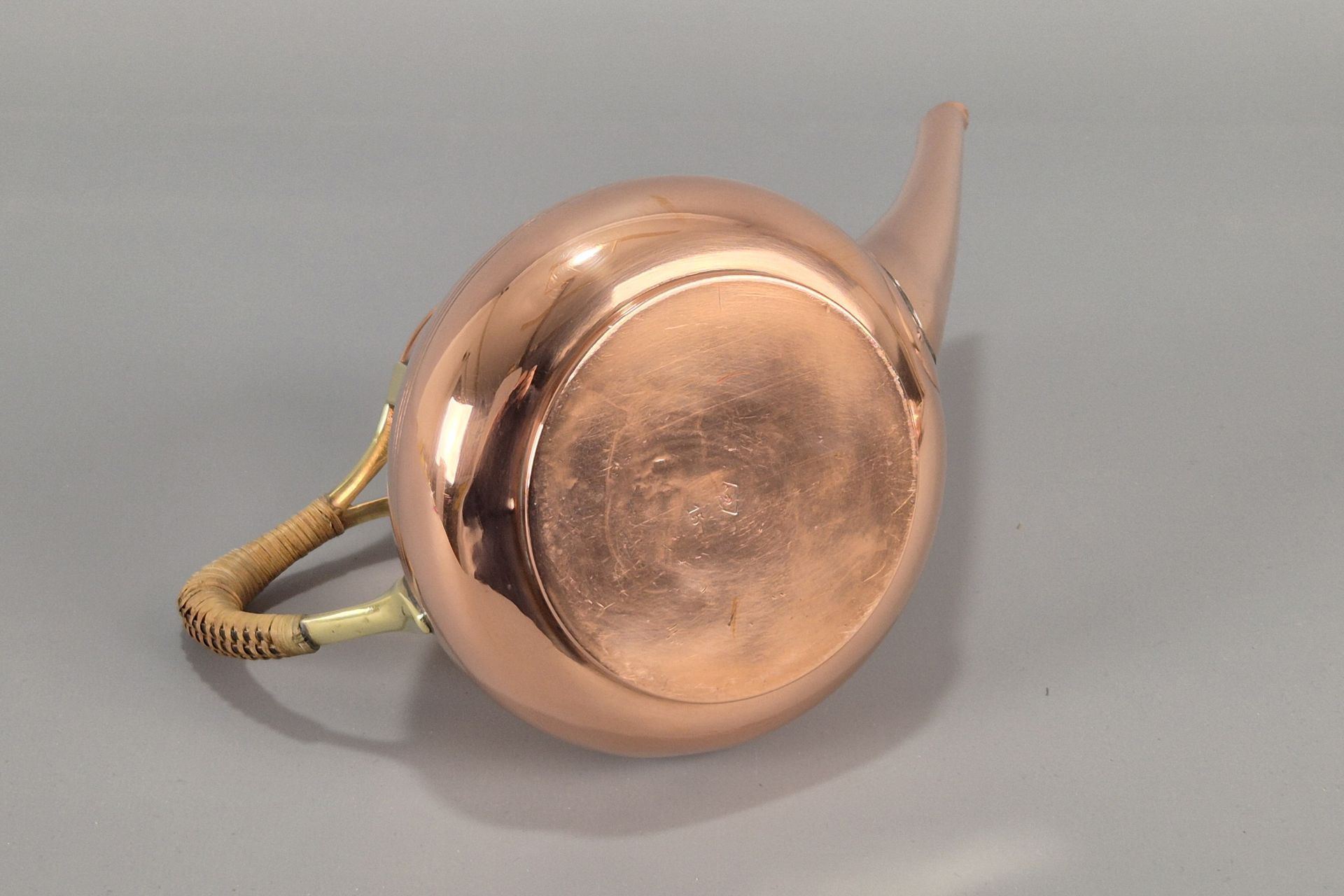
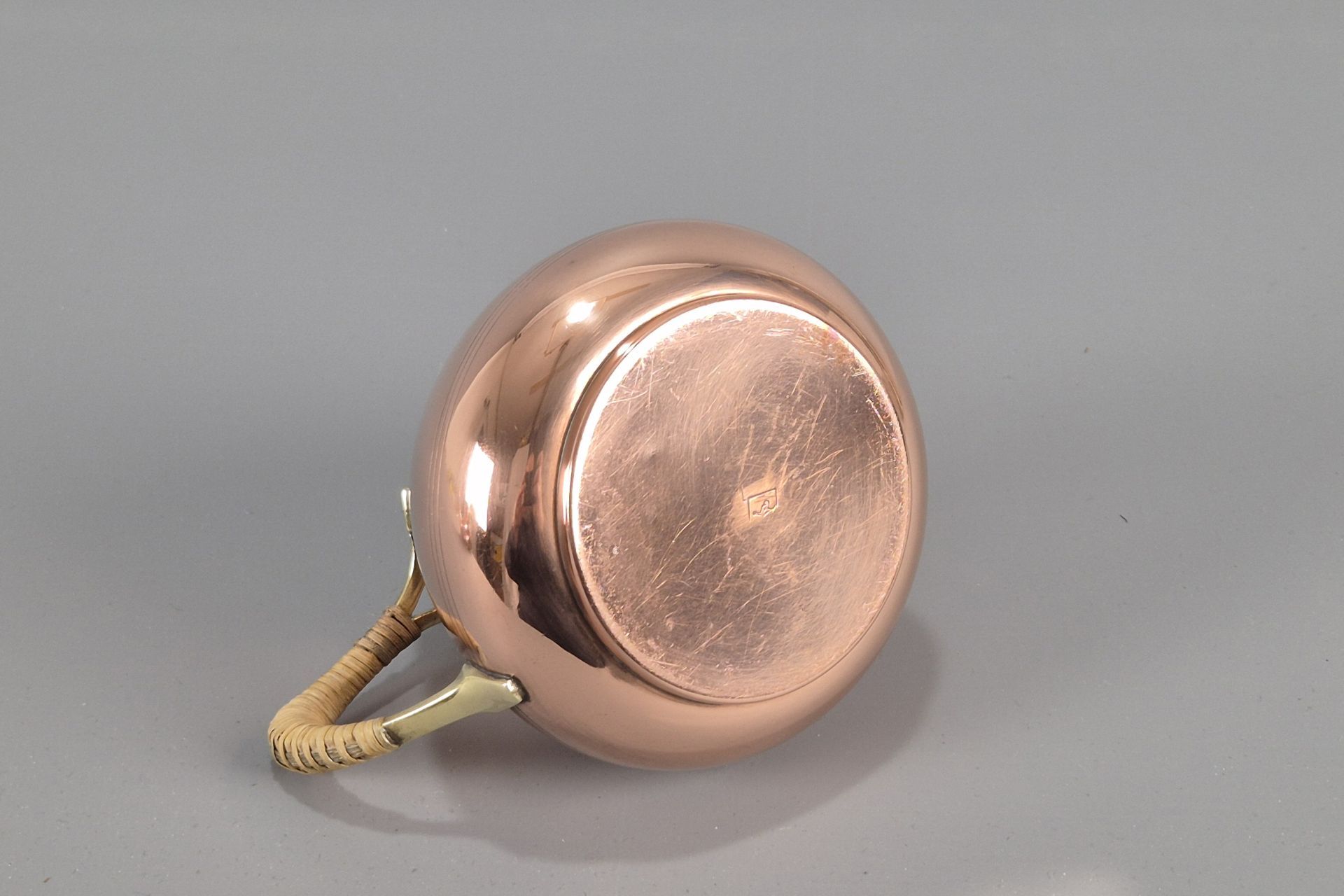
All pieces bear the WMF "running ostrich" hallmark (within a rhombus) on the underside.
The set has undergone extensive cleaning and careful restoration—preserving its original substance—and has been polished.
A visual highlight for any private or museum collection.

Price: €1,100
There are artists whose works and design language are so distinctive that they can be identified even amidst a multitude of other objects.
Jan Eisenloeffel (1876–1957, Amsterdam, Netherlands) was one such figure.
He was a prominent Dutch designer, silversmith, jeweler, interior architect, jewelry designer, illustrator, and artist working in glass and ceramics.
After studying at the National School for Applied Arts in Amsterdam and subsequently joining Höker & Sohn—an Amsterdam-based firm of jewelers and silversmiths—he became a business partner of William Höker in 1898. He acquired his expertise in enameling and the niello technique while in Russia, and further refined his knowledge of manufacturing processes through visits to workshops, including that of Carl Fabergé.
Upon his return to the Netherlands, he created a wide variety of objects, which went on to win awards at the 1900 Paris World’s Fair. He drew inspiration from Japanese tea sets, which possessed a sense of visual lightness and timelessness.
From around 1908, he was also active in Germany, working for various manufacturers.
His pieces—frequently tea and coffee services, along with accessories such as warmers and candlesticks—bear his own unique signature style; this aesthetic recurs across diverse objects, sometimes appearing identical and at other times in slightly modified forms.
His teapots often feature a specific, understated design language, characterized by parallel, radial grooves.
The spouts frequently display visible rivets at the point of attachment, and the shape of the neck is equally distinctive.
The influence of the British Arts and Crafts movement is also clearly evident.
The hinges and the soldered joints connecting the handles to the pots are consistent throughout his work. Handle shapes, lids, and knobs recur.

read more show less