Franz Willeke, born in Paderborn and the second-eldest of seven children, completed his journeyman examination as a master metalworker (specializing in decorative metalwork) in 1929 at the firm of Denkner in Paderborn—a company that primarily produced candlesticks, chandeliers, bowls, and liturgical objects. Seeking to further his expertise, he spent time in Berlin and Stuttgart, gaining experience in the lighting industry, before continuing his training in Cologne at the Werkkunstschule (School of Applied Arts) under Professor Walter Maria Kersting. At the time, Professor Kersting was already a prominent industrial designer with a roster of major, well-known clients.
Following his time in Cologne, Willeke moved to Bielefeld to join the architecture department at the Werkkunstschule under Professor Paul Griesser.
Griesser, a renowned interior architect with numerous industrial clients, recognized Willeke’s talent early on; he suggested that Willeke strike out on his own, noting that there was nothing more he could teach him.
Griesser even offered to help secure commissions and provide the necessary professional contacts.
And so, on March 1, 1932—in the midst of the global economic crisis—Franz Willeke launched his first company:
"Metallkunst Franz Willeke – Beleuchtungskörper" (Metal Art Franz Willeke – Lighting Fixtures), starting with a capital of just 268 Reichsmarks.
Working in very small batches—often producing only 6 to 8 units per order—he crafted chandeliers for spaces such as bank lobbies, cinema halls, and similar venues.
Much like the Bauhaus principles of "less is more" and "form follows function"—concepts that resonated deeply with him—Willeke also embraced a sentiment expressed by Goethe: "The connoisseur appreciates the simple beauty, while the masses are drawn to the ornate." In his work, he achieved a masterful perfection of the seemingly "simple." From 1962 onwards, his son Alfons assisted him in fulfilling customers' requests.
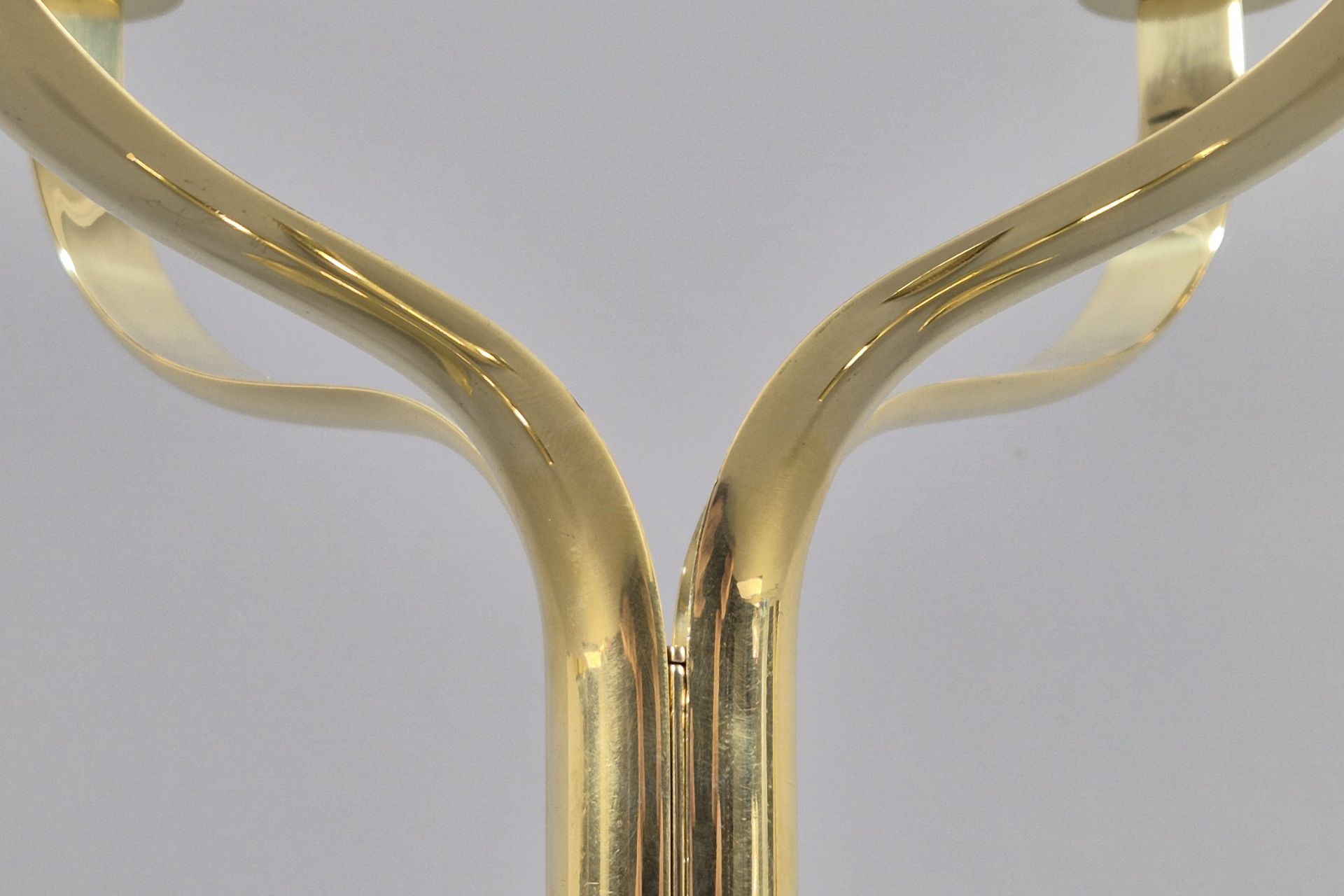
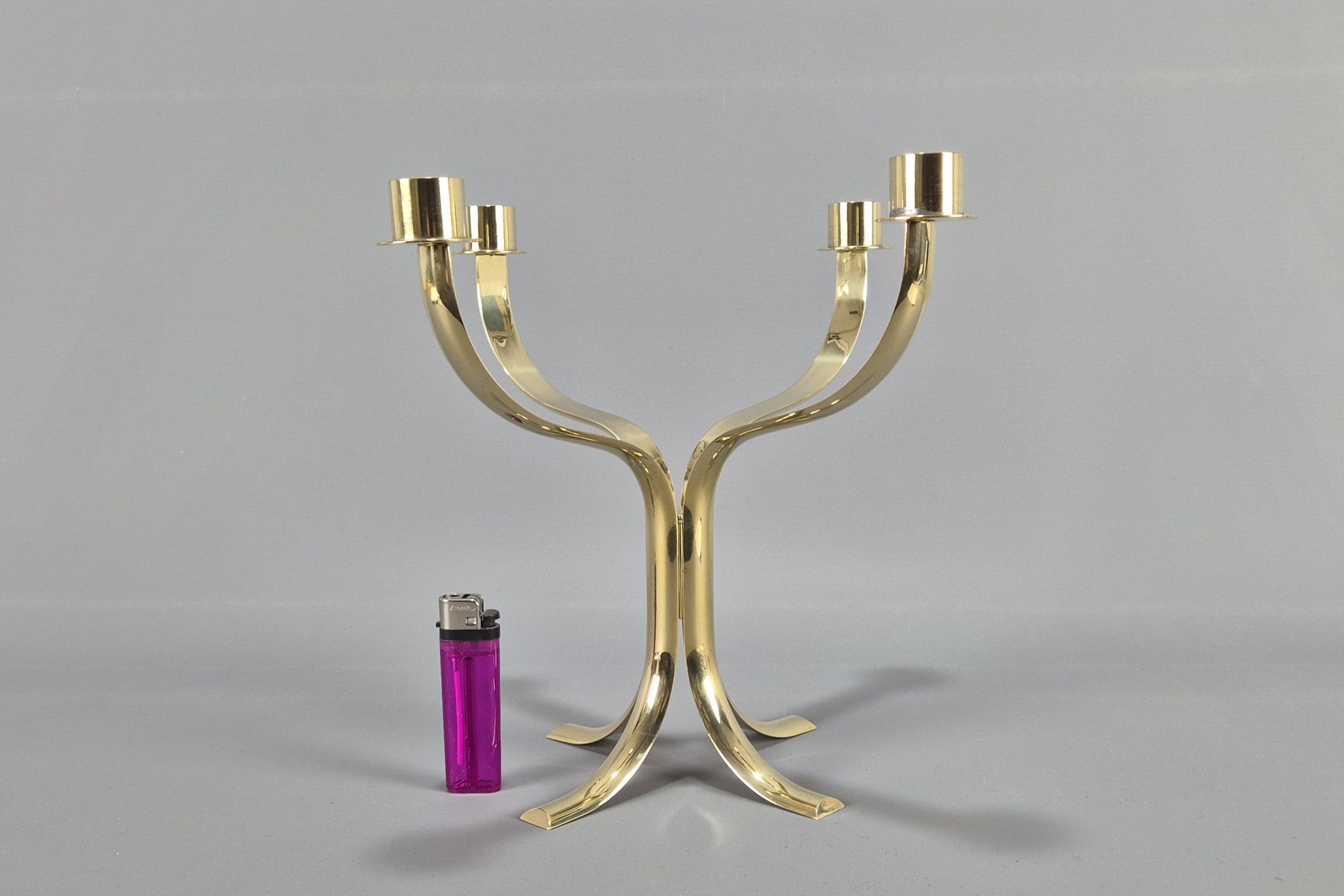
The chandelier offered here dates back to the early 1930s—a detail confirmed by his grandson.
Furthermore, Franz Willeke’s artistic career in Bielefeld is currently being documented, examined, and archived by a museum.